
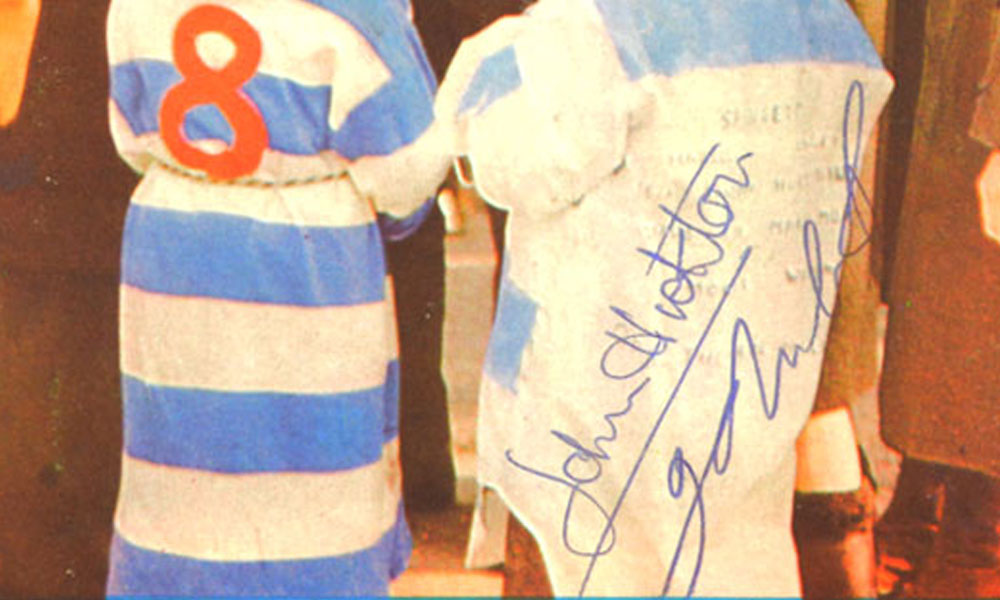
A signed programme combines two forms of football memorabilia in one item. The programme records a particular fixture, while the autograph creates a direct link to a player, manager or other figure associated with the game.
Some examples are valuable because they carry the signature of a legendary player or a complete cup-winning side. Others may have little additional market value but hold enormous personal meaning because the collector obtained the autograph outside the ground.
The challenge is deciding whether a signature is likely to be genuine, understanding the evidence behind it and recognising when ink enhances or harms the underlying programme.
Why collectors enjoy signed programmes
An autograph can turn a widely available issue into a unique object. Two collectors may own the same final programme, but only one copy may have been signed by the winning captain or goalscorer.
Signed items also preserve personal experiences. A football programme might have been carried to a training ground, supporters’ event or hotel where the team was staying. The autograph becomes part of the story of following football rather than simply another purchase.
Some collectors focus on one player, obtaining signatures across different clubs and stages of a career. Others try to build a signed programme from every member of a particular team.
A complete set does not need to be assembled at once. Adding autographs over several years can become an enjoyable collecting project in its own right.
Begin by identifying the signature
Before considering authenticity or value, establish whose name is meant to be on the programme.
Sellers may misidentify a hurried autograph, particularly when several players from the same period had similar signatures. Compare the squad and officials associated with the fixture, but remember that a programme could have been signed years later by someone unconnected with the match.
Look for a shirt number, dedication or other clue. Older collectors sometimes wrote the player’s name lightly beside an autograph, which can help identification even if the annotation affects condition.
Compare the signature with reliable examples from different dates. A player’s autograph can change during a long career, becoming shorter as the number of signing requests increases.
Do not rely on a single image found online, as that example could itself be incorrectly identified or inauthentic.
-
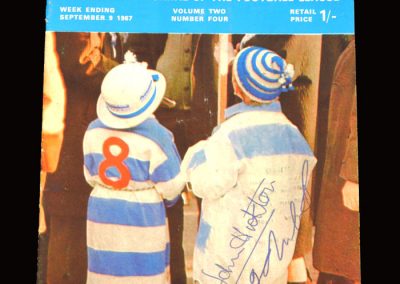
Football League Review (with Hickton Signature)
-

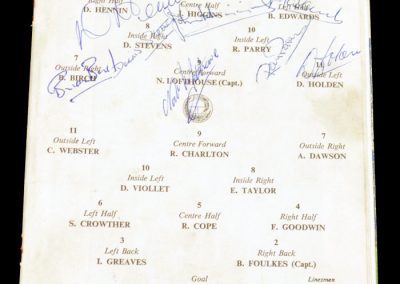
West Brom v Chelsea 02.10.1965 (with signatures)
-
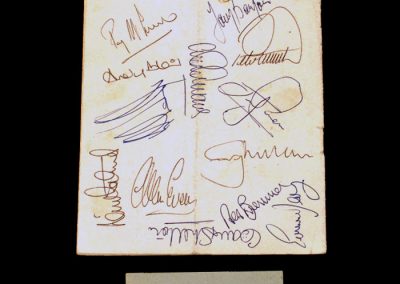
Bolton Wanderers v Manchester United 03.05.1958 | FA Cup Final | Signatures
-
Dynamo Kiev v Aston Villa 03.03.1982 - Quarter Final 1st Leg (0-0) Ticket & Signatures
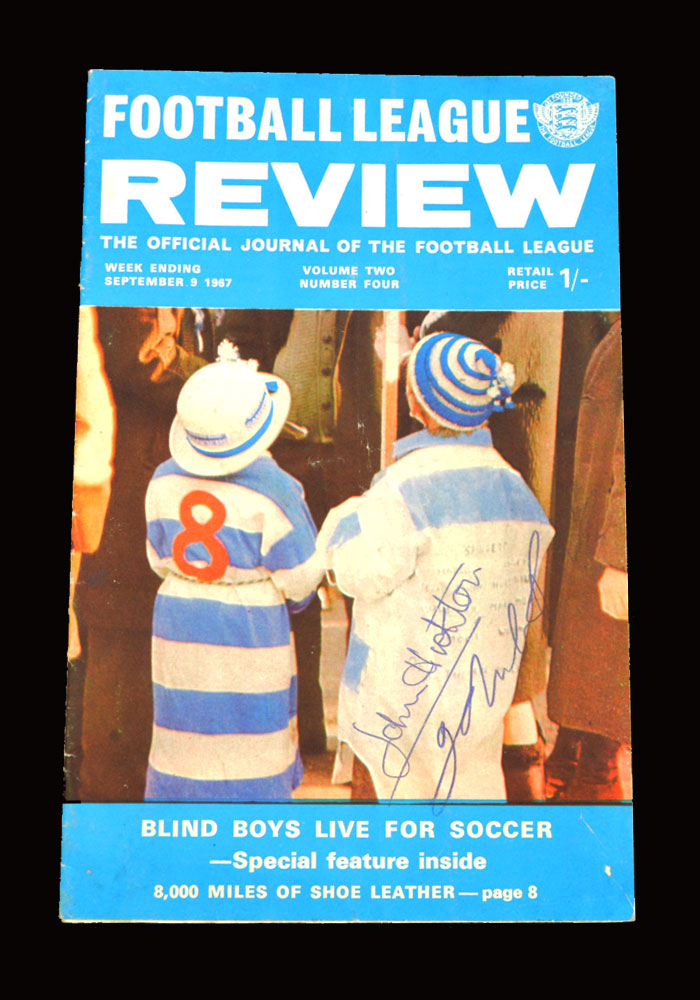

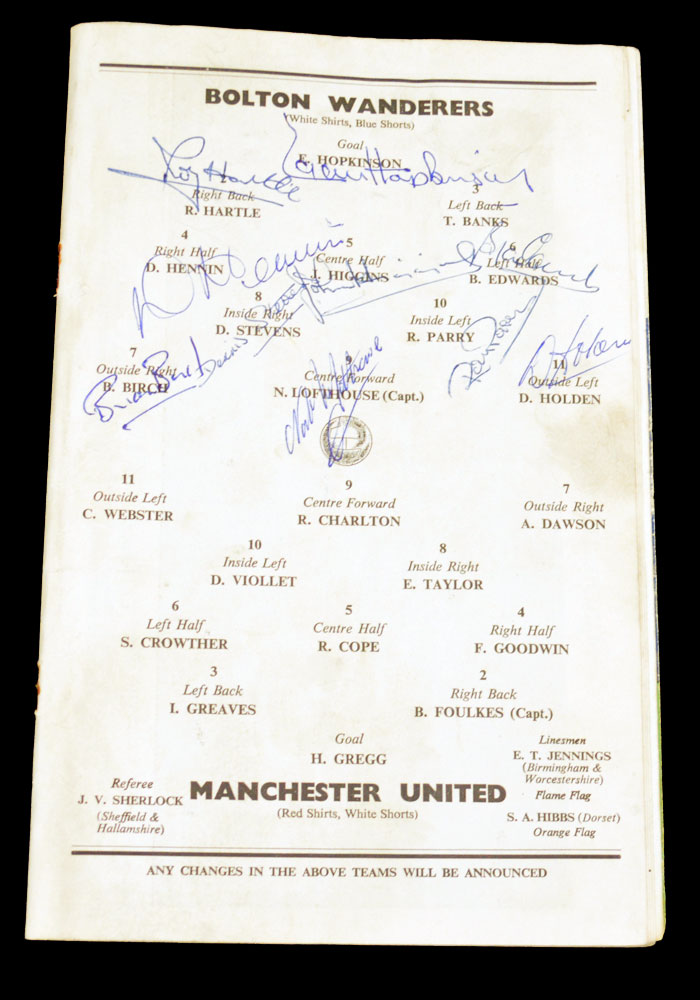
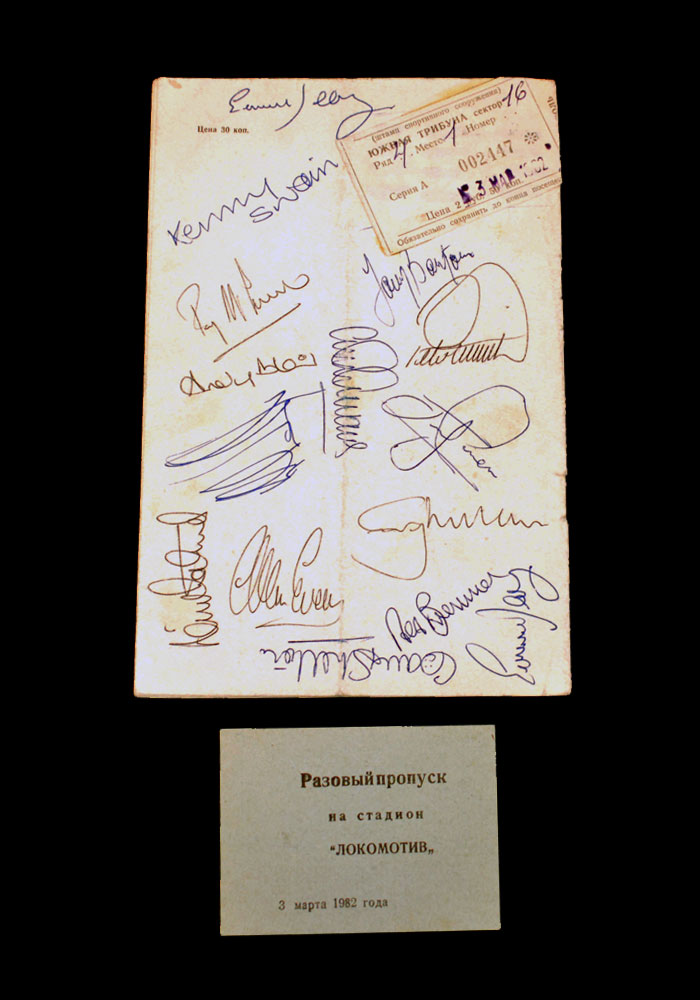
Look for natural writing characteristics
A genuine signature is usually written with fluid movement, although age, health, writing position and the circumstances of signing can affect its appearance.
Examine the flow of the lines. Slowly copied signatures may contain hesitation, tremors, blunt starts and unnatural stops. A forger concentrating on matching the shape can lose the speed and rhythm of ordinary handwriting.
Pen pressure may vary naturally through a signature. However, this is difficult to assess from an online photograph, especially on glossy paper.
Be cautious when several signatures appear almost identical in size, angle and spacing. Genuine autographs from the same person normally contain some variation. Repeatedly identical marks may indicate a printed reproduction, stamp or mechanical process.
Visual inspection can identify warning signs, but it cannot establish authenticity with certainty. A convincing-looking signature still needs a credible history.
Check whether the materials make sense
The ink and writing instrument should be plausible for the claimed date of signing. A signature said to have been obtained in the 1940s should not appear in a type of modern marker introduced much later.
This does not mean that the autograph must be contemporary with the programme. A retired player may have signed an old issue at a convention decades after the match.
Consider how the ink sits on the surface. Printed signatures form part of the image, while genuine ink usually rests above the paper. Under magnification, a live signature may show changes where the pen has crossed an existing stroke.
Felt-tip pens can fade or bleed, while ballpoint ink may leave an impression in the paper. Silver and gold markers are often used on dark modern covers.
Avoid conducting tests that could damage the programme. If an important item requires examination, consult an experienced authenticator.
Understand what provenance really means
Provenance is the documented history of an item. Strong provenance explains who obtained the signature, when and where it was signed, and how the programme passed to its present owner.
Useful evidence might include a photograph of the signing, correspondence, an event ticket, a contemporaneous diary entry or a receipt from a witnessed signing. A clear chain of ownership from a player, club official or established collection can also contribute.
A vague claim that an item came from a former employee or was “found in an attic” is a story, not verifiable provenance. Family accounts may be completely honest, but they do not prove authenticity by themselves.
Write down the history of any autograph you obtain personally. Record the date, location and circumstances, then keep related photographs or tickets with the programme.
Good provenance can be lost if one generation remembers the story but never documents it.
Treat certificates with caution
A certificate of authenticity is only as reliable as the person or business issuing it. A professionally printed card does not automatically prove that an autograph is genuine.
Check whether the certificate identifies the item precisely, includes a reference number and can be verified through the issuer. Research the authenticator’s reputation and whether their opinion is recognised by serious collectors and auction houses.
For higher-value autographs, independent authentication may increase buyer confidence. The expert may study writing style, known examples, ink, period and other relevant characteristics before issuing an opinion.
Authentication is still an informed professional judgement rather than an absolute guarantee. It should be considered alongside provenance and the qualities of the signature itself.
For an inexpensive autograph obtained personally, formal authentication may cost more than any increase in market value.
When a signature adds financial value
The identity of the signer is an obvious factor. Autographs from celebrated players, influential managers and football figures who signed relatively few items usually attract greater interest.
Relevance also matters. A cup final programme signed by the winning captain may be more desirable than an unrelated league issue carrying the same signature.
A clear, well-positioned autograph generally has broader appeal than a faint or heavily smudged example. Signatures on the cover are immediately visible, although some collectors prefer an autograph beside the player’s photograph or team line-up inside.
Scarcity must be considered across both elements. One of the rare football programmes may already be valuable without ink, and adding an unauthenticated signature could reduce its appeal. Conversely, a common issue signed by a scarce or historically important player may become considerably more desirable.
Market demand changes, so recent comparable sales are more useful than asking prices that have never attracted a buyer.
Team-signed programmes and multiple autographs
A programme signed by an entire squad can be an impressive record of a season or major fixture. Its value depends partly on completeness and whether the key players are included.
Count the signatures and identify each one where possible. Claims such as “signed by the team” should not be accepted without checking the names.
Mixed signing dates are common. A collector may have added players over time, producing variations in pen colour and positioning. This does not necessarily undermine authenticity, but it should be described accurately.
Multiple signatures can make authentication more complicated and expensive. Good provenance becomes particularly useful when the programme was signed at an official team event or came directly from a known participant.
When ink only adds a story
Not every autograph creates a financial premium. A signature from a fringe player, an unidentified name or a common modern signing may add little monetary value.
Personal dedications can narrow the pool of potential buyers because the programme is addressed to someone else. For the original recipient, however, that dedication may be the most meaningful part.
Informal inscriptions can also capture personality. A short message, date or reference to the result may transform an ordinary programme into a vivid personal record.
Collectors should not judge every signed item purely as an investment. Football memorabilia often matters because of memory and connection, not resale potential.
Protect signatures and their evidence
Store signed programmes away from direct sunlight, which can fade ink and covers. Use suitable archival sleeves or folders and avoid materials that may stick to the signature.
Do not laminate a signed programme or attach certificates directly to it. Keep provenance documents nearby but separate, ideally within the same labelled archival folder.
Create digital photographs of the programme, autograph and supporting evidence. Record the signer, signing date, provenance and any authentication reference in your catalogue.
Collect the person as well as the match
Signed programmes occupy a distinctive place between printed football history and personal contact. The best examples connect an appropriate signer to an important fixture through a credible, documented story.
Study the writing, compare reliable examples and question provenance that cannot be verified. For potentially valuable items, seek an informed opinion rather than trusting appearance or a certificate alone.
A signature may increase value, reduce the appeal of a rare programme or leave its market price almost unchanged. Yet even when the financial effect is modest, an authentic autograph can add something more personal: evidence that the programme once passed between a supporter and someone who helped create the history recorded inside it.