
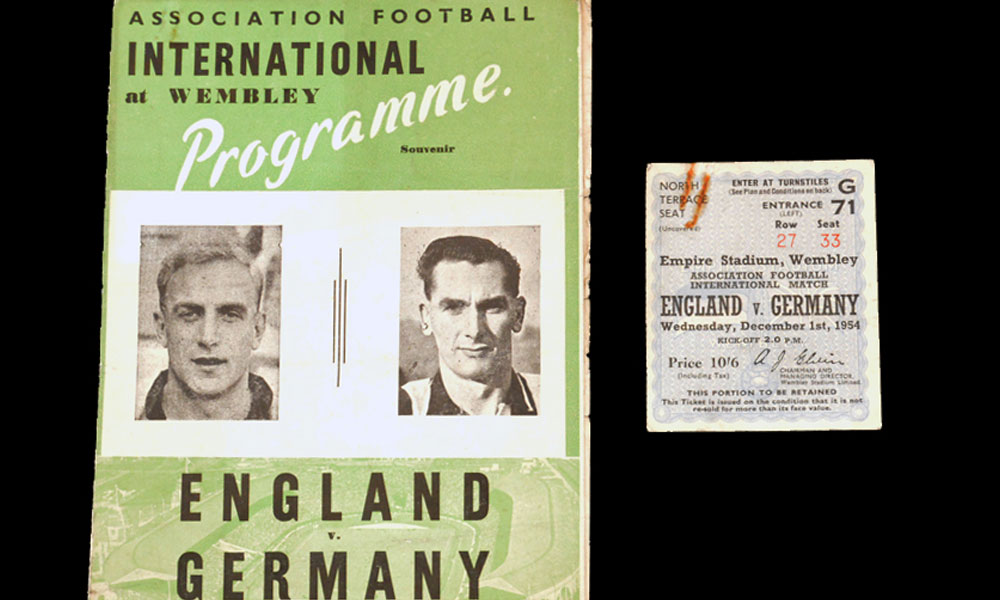
A football programme records the official presentation of a fixture, but it rarely tells the whole story of attending the match. A ticket identifies where a supporter stood or sat, a travel document shows how they reached the ground, and a team sheet captures changes made shortly before kick-off.
When these items survive together, they create a complete matchday set. Instead of representing only the game, the collection can reconstruct the wider day: the journey, price of admission, view from the ground and information available to supporters at the time.
For collectors of old football programmes, matching tickets and related ephemera can add historical context, personal character and, in some cases, greater desirability.
What makes a complete matchday set?
There is no single definition of completeness. At its simplest, a set contains the official programme and corresponding match ticket or used stub.
A more detailed group might include a ticket wallet, team sheet, fixture card, supporters’ club notice, travel ticket, newspaper report and handwritten notes. Major finals can produce menus, hospitality passes, rosettes, flags and official souvenir brochures.
The contents depend on the period and fixture. Earlier matches may have had relatively little associated material, while modern events can generate numerous ticket types, security passes and corporate publications.
The strongest sets contain items demonstrably linked to the same game. A programme and correct ticket are valuable companions even when they did not originally belong to the same supporter. A group preserved together since matchday adds another layer of history.
Why programmes and tickets complement each other
Programmes were designed to explain the fixture. They contain editorial notes, team information, photographs, statistics and advertisements. The ticket performed a different role: it granted access and recorded practical details.
Together, they answer questions that either item might leave unresolved. The programme identifies the teams and occasion, while the ticket may show the entrance, stand, row, seat and admission price.
A used stub can also confirm attendance. Torn edges, folds and handling may reduce pristine condition, but they provide evidence of how the object fulfilled its original purpose.
For neutral-venue semi-finals and finals, ticket colours or sections may indicate which end was allocated to each club. This helps reconstruct the distribution of supporters around the stadium.
Adding both items to a football programme collection turns an official publication into a more complete record of participation.
-
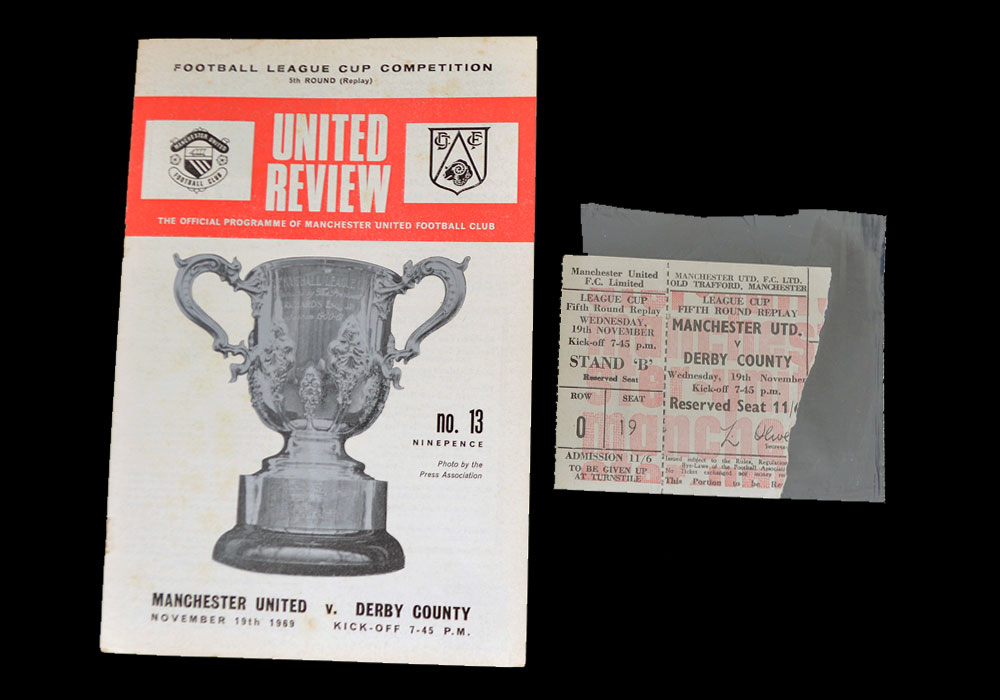
Man Utd v Derby 19.11.1969 (League Cup 5th Round Replay - with ticket)
-

Newcastle v Wolves 10.03.1951 - FA Cup Semi Final (Pirate & Ticket)
-

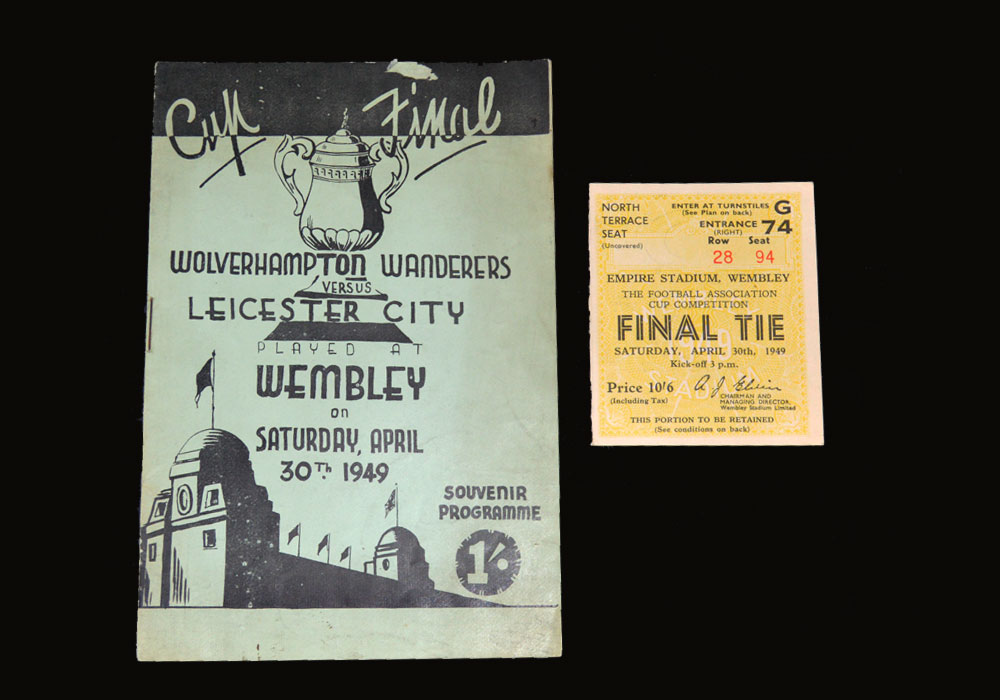
Leicester v Wolves 30.04.1949 - FA Cup Final (pirate & ticket)
-
England v Rest Of The UK 06.11.1963 | & Ticket


Season tickets and stub books tell a longer story
Season-ticket books and surviving stubs expand the idea beyond one match. They can show which fixtures were included, how admission categories changed and whether cup ties required separate vouchers.
An intact book may be attractive because so many examples were gradually dismantled during the season. However, a partially used book tells its own story. Remaining stubs may suggest matches that the holder missed, while annotations can record rearrangements or additional payments.
Matching a loose programme to the correct numbered voucher can create a strong season display. A run of programmes accompanied by a supporter’s original stub book offers a personal route through the campaign.
Check whether the season ticket belonged to the same period, stand and club. Designs can remain similar across several years, so dates, fixture lists and printed conditions are important.
Ephemera captures the journey
Matchday begins long before kick-off. Train tickets, coach itineraries, parking passes and supporters’ club travel sheets record how people reached the ground.
For an away fixture or European tie, this material can be particularly evocative. Ferry tickets, flight documents, hotel receipts and city maps show the scale of the journey undertaken by travelling supporters.
These items were not produced as collectables, which is why relatively few survive. Most were discarded once they had served their purpose.
Even ordinary objects can become revealing decades later. A rail fare, departure time or coach pick-up point places the match within the realities of its period.
When grouped with the programme and admission ticket, travel ephemera transforms a fixture into a complete day out rather than an isolated 90 minutes.
Reconstructing what supporters experienced
A matchday set can show what a supporter knew and saw at different stages of the day.
The ticket establishes their position in the ground. The programme provides the expected line-ups, while a separate team sheet may record late changes. A newspaper report supplies the result and contemporary reaction.
Food menus, drinks lists and hospitality documents reveal another side of the occasion. At major matches, these may include formal dining arrangements, guest lists and speeches that existed alongside the activity in the stands.
Personal additions can be equally valuable. A supporter may have marked the team changes, recorded scorers or written comments about the performance. A photograph taken from their seat could show the precise view attached to the ticket.
These details allow future collectors to reconstruct not merely what happened, but how the event may have felt to someone present.
Why complete sets can be prized
Collectors value completeness because associated items are often separated over time. Programmes move into one collection, tickets into another and small paper items are lost entirely.
A matched pair from a common league fixture may attract more interest than either item alone. For finals, debuts, record-breaking matches and famous European nights, the difference can be more significant.
Original provenance can add desirability. A group kept by the person who attended, particularly with photographs or written recollections, offers a traceable connection to the match.
Condition still matters, but expectations should reflect intended use. A ticket was designed to be torn, and a programme carried on crowded terraces may have folds. Some collectors prefer untouched examples; others value honest evidence of attendance.
Completeness should never be assumed from the seller’s description. Check dates, opponents, competition, venue and ticket section carefully.
Finding matching tickets and missing pieces
If you already own the programme, add the ticket details to a wanted list. Include the date, venue and any relevant stand or price information.
Programme fairs, specialist dealers and online auctions are useful sources, but tickets may be listed separately from football programmes. Search using the clubs, date, competition and venue rather than relying on one category.
Mixed paper collections can contain overlooked items. Old scrapbooks, family albums and boxes of travel documents sometimes preserve tickets beside newspaper cuttings or photographs.
Collectors’ groups are helpful when several ticket designs existed for the same fixture. Other supporters may identify colours, sections or counterfoils that are difficult to interpret.
Be patient. The final piece may take longer to find than the programme, particularly for ordinary league games whose tickets were rarely saved.
Keep original groups together
When a collection comes with a credible matchday history, resist separating it merely because individual items fit different storage categories.
Place the programme, ticket and associated papers within the same archival folder or clearly linked sleeves. Avoid adhesives, staples and lamination. Small tickets need suitable support so they do not slip, crease or become lost.
Record the provenance in your catalogue. Note who attended, how the set was acquired and which items were found together.
Scan or photograph both sides of tickets because admission details, conditions or handwritten notes may appear on the reverse. Digital images can also create an attractive visual index without repeated handling.
Newspaper cuttings require care because poor-quality newsprint can deteriorate and affect adjacent material. Store them separately within the linked group using suitable archival protection.
Display the whole story
A complete set can make an engaging framed display. The programme cover provides the main visual focus, while the ticket, travel item and short match description add context.
Use conservation-quality materials and avoid placing originals in direct sunlight. For valuable or fragile sets, display reproductions and keep the authentic items stored safely.
Another option is a matchday album with one fixture per spread. Include photographs, captions and copies of contemporary reports alongside archival pockets for the original material.
Organising displays chronologically can follow a cup run or promotion season. The expanding sets reveal how the supporter’s experience changed as the stakes increased.
More than the final score
Old football programmes preserve the club’s official voice, but tickets and ephemera bring the individual supporter back into the story. They record the price paid, entrance used, journey taken and small practical details surrounding the game.
A complete matchday set does not need to contain every possible souvenir. Its appeal comes from the relationship between the surviving items and the fuller picture they create.
By collecting programmes alongside tickets, stub books, travel papers and personal notes, enthusiasts can build a football programme collection that goes beyond results and line-ups. Each set becomes a reconstruction of a day when someone left home, travelled to the ground and carried a small bundle of paper back with them.