

The Old Firm rivalry is one of football’s most documented stories, but it’s the match programmes that capture the era-by-era detail collectors love: the line-ups that sparked debate, the adverts that date a decade instantly, the manager’s notes, the competition formats, even the paper quality that tells you how tight things were at the printers. For anyone building a collection of old football programmes, Celtic and Rangers issues offer a rich, endlessly varied theme that links domestic dominance with iconic European nights.
This guide looks at the types of Celtic and Rangers programmes that tend to stand out—title-deciders, cup showpieces, European finals and, of course, Old Firm derbies—and why Scottish football history translates so well onto paper.
Why the Old Firm is a collector’s goldmine
Some clubs have great programmes; the Old Firm has chapters. The rivalry is constant, but the context keeps changing: different competition structures, different stadium cultures, different design styles, and different football eras. That variety makes it easy to collect with purpose. You can chase one season, one manager’s reign, a particular player’s peak, or a run of major finals. And because these matches mattered so much, programmes often survive in quantity—yet specific dates, editions and conditions can still be surprisingly scarce.
Old Firm derby programmes: more than a fixture
If you’re only buying “Celtic v Rangers” on the cover, you’re missing the fun. Derby programmes are a football history snapshot: the tone in the welcome notes, how the clubs framed the occasion, the league context, and the little clues about supporter culture at the time.
Collectors often gravitate towards derby programmes that mark:
- First or last Old Firm appearances of star players
- Managerial turning points, debuts, sackings or “must-win” narratives
- Milestone matches (notable unbeaten runs, title-clinching sequences, major injuries)
- Cup derby ties, where the stakes add an extra layer of drama to the paper trail
Even when the cover design looks similar across a season, the internal content changes—squad notes, form guides, and period adverts make each issue distinct.
-

Celtic v Rangers 26.04.1969 - Scottish Cup Final
-
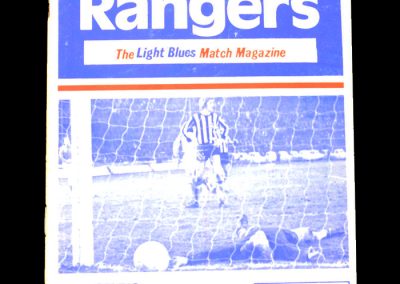
Rangers v Celtic 02.01.1971 (Ibrox disaster)
-

Rangers v Celtic 19.09.1953
-

Celtic v Rangers 19.10.1957 (Dick in goal for Celtic in the famous 7-1 win)


Title showdowns and decisive league clashes
League title races create the strongest “story arc” for collectors. Programmes from matches that effectively swung the championship can become the cornerstone of an Old Firm-themed run, especially if you pair the programme with a league table clipping or a match ticket.
When you’re collecting old football programmes tied to titles, look for issues that include:
- Run-in fixtures near the end of the season
- Top-of-the-table clashes with clear championship implications
- Post-match legacy—the games people still reference years later
One of the joys of Scottish collecting is how quickly you can build a coherent narrative: a handful of key league programmes can tell an entire season’s story in a way that feels tangible.
Hampden showpieces: Scottish Cup and League Cup finals
Cup finals are a natural collecting target because they’re self-contained events—one date, one venue, one trophy on the line. Programmes from Hampden Park finals involving Celtic or Rangers often have that “occasion feel”, whether in design, extra pages, or special editorial content.
Final programmes are also a brilliant way to bring in broader football history: you’ll see competition branding evolve, sponsors appear and change, and printing quality vary across decades. For collectors, they’re the perfect blend of prestige and context—especially when you focus on finals that sit within a wider domestic treble push or a run of dominance.
European nights: where paper meets legend
If domestic derbies are the heartbeat, European programmes are the headline acts. Celtic and Rangers have both produced programme-worthy continental moments, and European issues often differ from standard league editions—different competition logos, visiting team profiles, and more expansive editorial content.
Key types of European programmes collectors look for include:
- European finals and showpiece ties, where the programme becomes a true memento
- Semi-finals and quarter-finals, often harder to source in top condition
- Iconic home nights at Celtic Park or Ibrox, where atmosphere and legacy are part of the appeal
- Two-leg ties, where collecting both home and away editions creates a satisfying pair
European programmes also highlight how clubs presented themselves to an international audience—sometimes more polished, sometimes more intense, but nearly always more memorable on the page.
What makes Scottish issues such a rich collecting theme
Scottish programmes have their own character, and that’s a big part of the appeal. Collectors often comment on how the design and production feel distinct from many English issues of the same period. Depending on the era, you’ll see:
- Different formats and paper stock, from lightweight staples to more substantial covers
- Local advertising that instantly places the programme in Glasgow’s commercial life
- Competition identity that reflects Scottish football’s unique structures and traditions
- Editorial tone that can be wonderfully direct—especially around derby matches and big occasions
That “sense of place” is why Scottish football history is so satisfying to collect. You’re not just collecting match details—you’re collecting a slice of cultural context.
What collectors value: condition, completeness and authenticity
With old football programmes, value is rarely just about the match. Condition matters—clean covers, tight staples, minimal writing, and intact pages. For Old Firm collecting, a few practical checks help you buy smarter:
- Look for complete pages (centre spreads and team sheets are the first to suffer)
- Check for staples and spine integrity, especially on older, thinner paper
- Watch for excessive creasing or staining, common on programmes taken to wet matches
- Be realistic about age—some wear is normal, but damage that affects display and readability will affect desirability
Authenticity matters too. For major occasions—cup finals and European showpieces—make sure the edition matches the match and competition, as some events had multiple printings or variations.
How to build an Old Firm programme collection without overbuying
It’s easy to go broad and end up with a pile that feels random. A more satisfying approach is to choose a collecting “lane” and build depth. Here are five routes that work well:
- Derby-only run: one Celtic v Rangers programme per season across a chosen era
- Trophy trail: Scottish Cup and League Cup finals involving either club
- European highlights: major home ties, semi-finals, and finals programmes
- A single season story: league, cups, and Europe for a standout campaign
- Player-focused collecting: programmes from landmark matches in a legend’s career
A focused plan helps you spot gaps, prioritise better condition copies, and avoid buying duplicates that don’t add anything to the narrative.
Finding classics and filling the gaps
A specialist archive-style marketplace like 10footballs is ideal when you’re collecting with a theme, because you can browse by club, competition, and era, then gradually fill missing dates. The best collections aren’t built in one spree—they’re built through smart upgrades: replacing a worn copy with a cleaner one, adding the matching leg of a European tie, or upgrading a key Old Firm issue to a sharper condition.
Final thoughts: two clubs, a century of paper history
Celtic and Rangers programmes offer the perfect collecting mix: rivalry, trophies, iconic venues, and European ambition—captured in a format that’s both historical and personal. Whether you chase title-deciders, Hampden finals or continental nights, Old Firm programmes bring football history to life in a way highlights and headlines never quite can. They’re not just souvenirs; they’re documents of the moments Scottish football still talks about.