
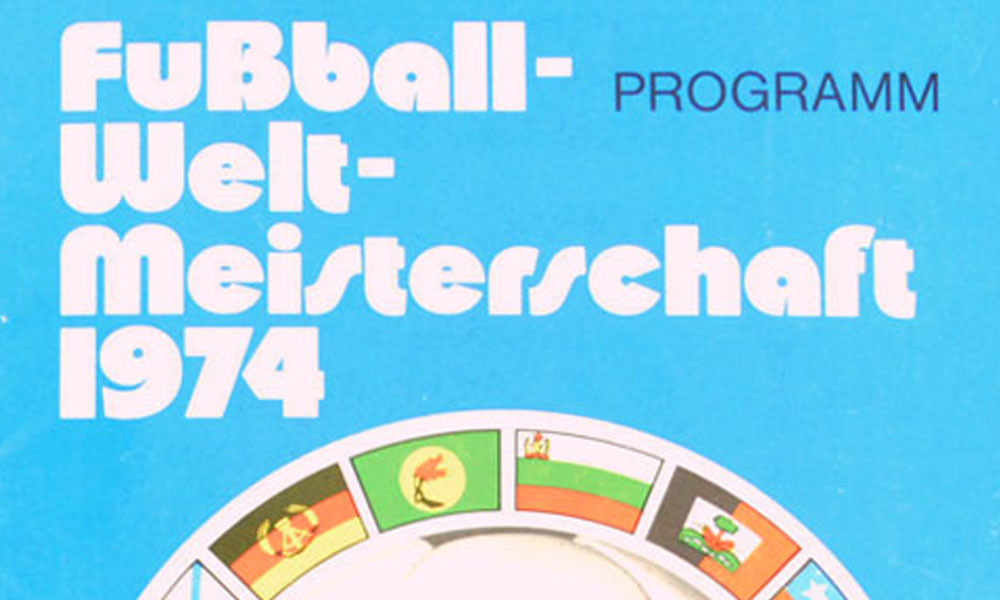
For collectors of old football programmes, World Cup finals sit in a special category. They’re not just a matchday souvenir — they’re a snapshot of how football presented itself to the world at a particular moment in time. The artwork, typography, paper quality, adverts, team pages, even the language choices tell a story about the host nation, the era, and the tournament’s place in the wider culture.
From the earliest, almost mythical issues of the 1930s to glossy modern publications packed with sponsor content and high-resolution photography, world cup programmes have changed dramatically. This guide tracks that evolution, highlights the editions that tend to excite collectors, and explains what to look for if you’re targeting finals in particular.
Why World Cup final programmes are such a big deal
World Cup Final programmes combine several things collectors love: a single, definitive match; global interest; iconic teams and players; and a strong likelihood that the programme was kept as a memento. The catch is that “kept” doesn’t always mean “kept well”. Many have been folded into pockets, stored in lofts, or handled by generations of fans.
The appeal is also visual. World Cup branding has always leaned into bold poster design and national motifs, so finals programmes often look striking on a shelf or framed on a wall. If you enjoy collecting old football programmes with strong design, finals are a natural focus.
Uruguay 1930: the starting point and the toughest hunt
The first World Cup final sits at the very beginning of organised tournament publishing. Early programmes were often basic, locally produced, and far less standardised than later editions. That means collectors should be prepared for variation — different printings, language differences, and a general scarcity that makes this era more about patience and provenance than bargain-hunting.
If your collecting goal is “one from every final”, the 1930s are usually the barrier. Condition, authenticity, and seller credibility matter more than anything else.
Italy 1934 and France 1938: pre-war design with a continental feel
By the mid-1930s, programmes and tournament print culture had a more recognisable European style: cleaner layouts, illustrated covers, and a more formal approach to match information. Collectors tend to value these issues for their age and the sense of “another football world” they capture — before post-war modernisation, mass TV audiences, and the commercial boom.
These programmes can feature elegant typography and period adverts that feel closer to theatre playbills than modern sports media. For collectors, that aesthetic difference is part of the appeal.
Brazil 1950: the return and the rise of a new visual language
After the wartime gap, 1950 represents a shift. Printing and photography improved, and the presentation of teams and tournament identity started to feel more intentional. Even if programmes remained relatively modest by today’s standards, you begin to see the building blocks of modern tournament publishing: clearer structure, stronger cover design, and more expansive editorial content.
This is also an era where condition becomes a major differentiator. Older paper stock can mark easily, and clean copies stand out.
Switzerland 1954 and Sweden 1958: modern football starts to look like itself
The mid-to-late 1950s push programmes towards a more familiar format. You’ll often find more photography, more obvious sponsorship and advertising, and a clearer “official” tone. For collectors of world cup programmes, this period can be a sweet spot: vintage enough to feel special, but not quite as unreachable as the earliest years.
Covers from this era can be deceptively simple, which is part of their charm — they feel like genuine match documents rather than glossy collectibles.
-
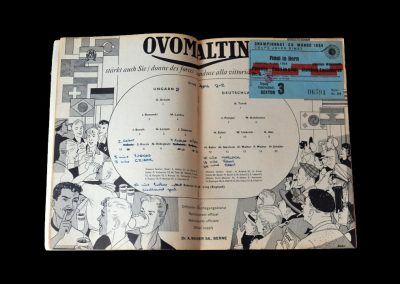
World Cup 1954 - Hungary v West Germany 2-3 (Final)
-
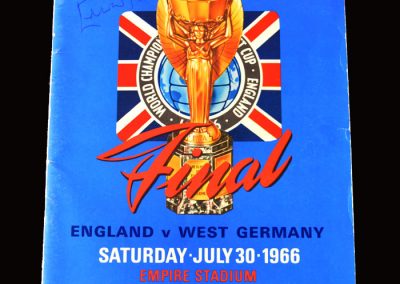
England v West Germany 30.07.1966 - World Cup Final
-

1970 Mexico World Cup Tournament Programme
-

Brazil v Italy 21.06.1970 - World Cup 1970 Final


Chile 1962 and England 1966: a collector’s favourite decade
The 1960s are where many collectors start, and for good reason. Printing quality, graphic design, and football culture all aligned in a way that produced memorable programmes. England 1966 in particular remains a cornerstone for UK collectors, not only because of the match itself but because the design feels instantly “of its time”: bold, official, and highly recognisable.
If you collect old football programmes broadly, 1966 final material often becomes a centrepiece alongside domestic finals and major international fixtures.
Mexico 1970: colour, culture, and iconic tournament branding
Mexico 1970 is often cited as a turning point for modern World Cup visual identity. Colour printing and strong tournament branding became central, and programmes from this era can look stunning even to non-collectors. If your goal is to build a visually striking run of finals, 1970 is usually on the shortlist.
Collectors tend to enjoy how the programme reflects the host nation’s graphic style and the broader “big event” feeling that World Cups would increasingly lean into.
The 1970s and early 1980s: bigger publishing, more structure
From West Germany 1974 through Argentina 1978 and Spain 1982, you generally see programmes becoming more substantial and professionally produced. Content expands: more editorial pages, clearer player and squad details, and more sponsor presence. This is the era where programme collecting starts to feel more like collecting a magazine series — consistent, official, and designed with broad distribution in mind.
For collectors, this period offers a balance of availability and display appeal. You can often assemble a strong set without needing specialist contacts for every purchase, while still enjoying a vintage look and feel.
Mexico 1986 and Italy 1990: the TV era begins to dominate
By the late 1980s and into 1990, football’s presentation is increasingly shaped by television. Programmes reflect that shift: more photography, more emphasis on star players, and a more polished editorial voice. Collectors often like these editions because they sit at the crossroads — still “classic programme culture”, but clearly moving into the modern marketing era.
If you’re targeting world cup programmes with strong nostalgia, these finals often resonate with collectors who grew up watching the tournament.
USA 1994 to France 1998: glossy production and global sponsorship
The mid-to-late 1990s sees a clear move towards glossy covers, heavier branding, and a more corporate style of sports publishing. These programmes can be excellent for collectors who enjoy clean design and high-quality photography, but they also mark a point where uniqueness can feel diluted by sponsor consistency and template-driven layouts.
That said, the best editions from this era still shine — especially where the host nation’s visual identity comes through in the cover art and tournament graphics.
2002 to Qatar 2022: modern programmes as collectibles
In the 2000s and beyond, final programmes often resemble premium event magazines: high-resolution photography, extensive sponsor content, polished player profiles, and a strong emphasis on the tournament’s official branding. The upside is consistency and print quality. The downside for collectors is that modern items can feel easier to obtain — which means rarity often comes from specifics: limited runs, stadium-only variants, pristine condition, or complete matchday sets.
If you’re collecting “from Uruguay 1930 to today”, the most recent final programmes are usually the easiest part of the run. The challenge becomes choosing which versions you want, and how you define “complete”.
What makes a World Cup final programme collectible
Not all final programmes are equal in collecting terms. When deciding what to target, consider:
- Condition and completeness: staples intact, no heavy folds, no missing pages
- Authenticity: especially for early finals, provenance matters
- Visual impact: some covers simply display better than others
- Historical pull: iconic matches, famous goals, landmark teams
- Scarcity factors: early editions, limited distribution, or versions tied to the stadium experience
If you’re buying online, always look for clear photos of the cover, spine/staples, and centre pages. With older issues, check for writing, tape repairs, and trimmed edges.
Building a focused collection without getting overwhelmed
A full run of finals is a brilliant long-term project, but it can be daunting. Many collectors start with a theme, then expand. Practical approaches include:
- collecting one final per decade first
- building a “most visually striking covers” run
- focusing on finals involving a favourite nation
- pairing the final programme with a ticket, press photo, or newspaper for a mini display
That way you’re building momentum while learning the market for old football programmes and world cup programmes as you go.
World Cup Programmes
World Cup final programmes are football history you can hold in your hands. They chart the sport’s shift from local print culture to global entertainment, and they capture the design trends of each era along the way. Whether you’re chasing the earliest rarities, building a display-worthy run from the 1960s onwards, or aiming for every final from Uruguay 1930 to the modern day, the joy is in the hunt — and in the stories each programme quietly tells.