

The 1950s are often remembered as a turning point for British life: a country shaking off rationing, rebuilding cities, and leaning into optimism, consumer choice and home entertainment. Football didn’t sit outside that story — it was right at the heart of it. And if you want a tangible way to trace that shift, few pieces of football memorabilia do it better than the FA Cup final programmes of the decade.
These Wembley issues capture far more than line-ups and advertisements. They show changing design tastes, the language of post-war pride, and the growing influence of television as the Cup final became a national ritual. For collectors of rare football programmes, the 1950s are a sweet spot: old enough to feel genuinely historic, but modern enough to feature familiar clubs, legendary players, and programmes that still display beautifully today.
Why the 1950s feel like a “golden decade” at Wembley
The FA Cup final was already the showpiece, but the 1950s cemented it as a cultural event. Wembley wasn’t just a stadium; it was a stage for a national day out. Programmes from this era reflect that ceremony: formal editorial tone, civic pride, and a sense that the match mattered beyond sport.
At the same time, the decade was a bridge between old and new. Print production improved, photography became more common, and advertising began to mirror the new consumer confidence of the post-war boom. For collectors, that means programmes that still have a classic, restrained feel, but with richer content than earlier eras.
Covers as time capsules: from formal crests to confident design
One of the joys of collecting 1950s Cup final programmes is watching cover design evolve. Early in the decade, many issues lean into formality — crests, traditional typography, and a “commemorative document” look that suits the occasion. As the years progress, the covers often feel bolder and more visually assured, reflecting wider changes in British graphic design.
Collectors tend to look for covers that:
- present the clubs and competition with clear, confident layout
- feature strong colour or distinctive print styling
- remain clean at the edges (the Wembley journey was not kind to paper)
- show minimal creasing around staples and spine
Even when designs are simple, they’re rarely bland. The simplicity often makes them display well, and it places the focus on the match as a national moment rather than a marketing product.
-
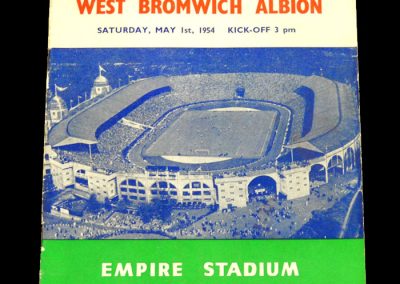
Preston North End v West Bromwich Albion 01.05.1954 | FA Cup Final
-
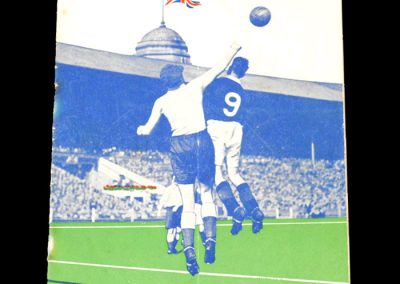
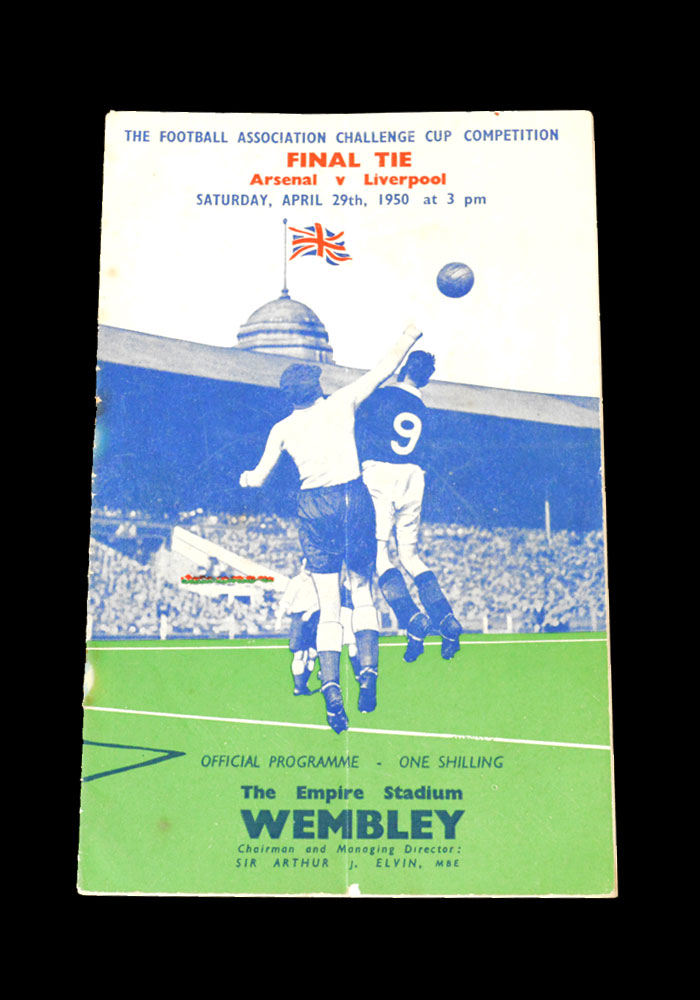
Arsenal v Liverpool 29.04.1950 - FA Cup Final
-
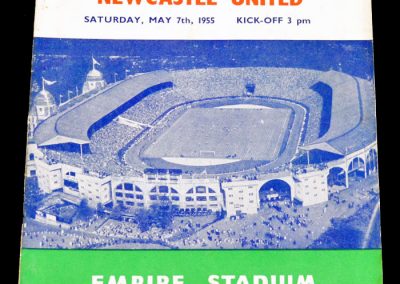
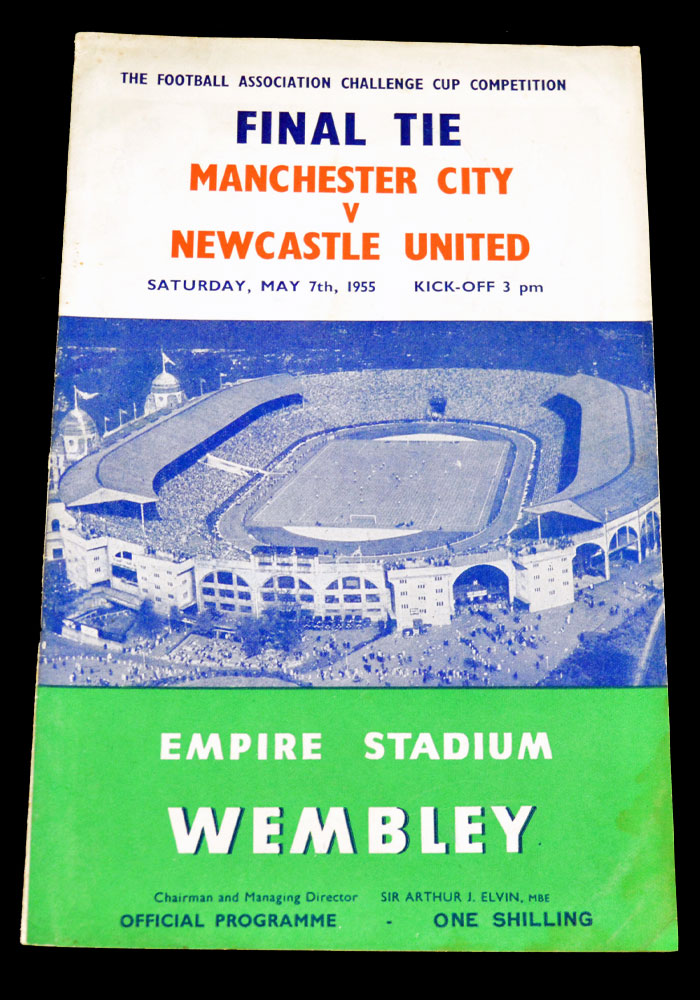
Manchester City v Newcastle United 07.05.1955 | FA Cup Final
-

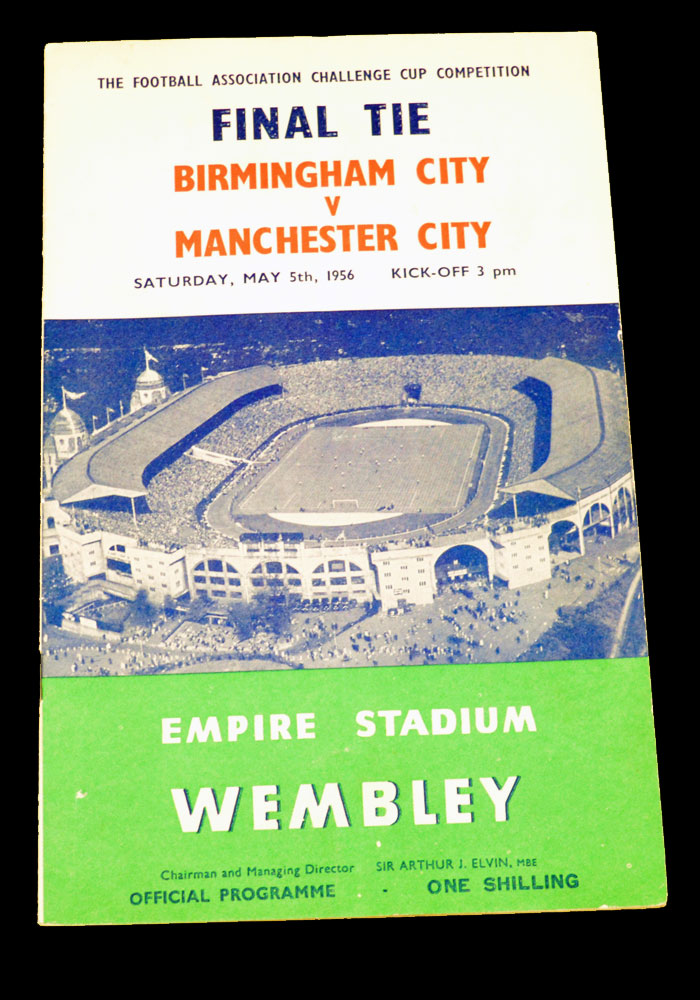
Birmingham City v Manchester City 05.05.1956 | FA Cup Final

Editorials and the post-war boom: a nation finding its voice again
Inside the programmes, the editorials and forewords tell you what Britain wanted to be in the 1950s. There is a noticeable tone of respectability and rebuilding: references to tradition, sportsmanship, duty, and pride in institutions. Wembley is presented as an honour, and the Cup final as something close to a civic ceremony.
As the decade develops, you can sense the country’s rising confidence. Advertising becomes more varied and aspirational. Mentions of travel, household goods, and leisure carry an undertone of “life is improving”. That context adds depth to collecting: these aren’t just match programmes, they’re cultural documents.
For football memorabilia collectors, those editorial pages can be as interesting as the match details because they anchor the programme in its era.
Famous upsets and defining stories: when the programme becomes a souvenir of shock
A major reason 1950s finals remain so collectible is the number of memorable storylines. Upsets and unexpected triumphs are exactly the kind of moments that turn a programme from “nice to have” into a prized keepsake.
A Cup final programme is particularly desirable when it’s linked to:
- a giant-killing narrative (smaller club against a favourite)
- a historic first (a club’s first final, or a first win in generations)
- a match remembered for a famous goal, save, or turning point
- a final that became folklore through radio and emerging TV coverage
Collectors often pursue finals not only for club loyalty, but for the match story itself. If you’re building a 1950s FA Cup final run, consider collecting around narratives rather than just years — it gives the decade a coherent shape.
The rise of television: programmes in the age of the living room
Television changed the Cup final experience. For the first time, huge audiences could see the occasion rather than imagine it. That shift affected how the final was talked about, how players became recognisable personalities, and how Wembley day entered the national calendar.
Programmes from the 1950s sit at an interesting point in this transition. They still assume many readers are in the ground, holding the programme in hand. Yet you begin to notice a broader “event framing” that matches a national audience: more emphasis on the spectacle, more player context, and a sense that the match is being watched and discussed beyond Wembley’s terraces.
For collectors, this is one reason the decade stands out. These issues represent the moment football memorabilia began to spread beyond the match-going fan and into mainstream households.
What to look for when collecting 1950s FA Cup final programmes
If you’re hunting rare football programmes from this period, condition and authenticity are everything. Wembley programmes were often folded, rolled, or squeezed into coat pockets. Finding clean examples can be a challenge, especially for the most sought-after finals.
Here’s a practical checklist:
- Staples and spine: rusted staples are common; loose pages reduce value
- Folds and creases: a single centre fold is often the norm, but heavy creasing matters
- Writing and names: many owners wrote their name inside; some collectors accept it, others don’t
- Tears and tape repairs: tape is a major red flag for display collectors
- Cover brightness: fading and staining can dull otherwise striking designs
- Completeness: ensure no pages are missing, especially adverts and team pages
If you’re buying online, look for clear photos of the cover, staples, centre spread, and back page. A listing with vague wording but no detailed images is rarely worth the risk for 1950s issues.
Display appeal: why these programmes look so good in a collection
1950s Cup final programmes are often visually satisfying as a set. Even if each individual design is understated, together they tell a story: changing typography, shifts in print quality, and the slow move towards modern sports publishing.
Many collectors display them:
- framed by year or by club
- alongside tickets, rosettes, or commemorative items
- in decade runs within albums or archival sleeves
- as part of a Wembley-themed football memorabilia wall
If you’re building a display, consider protective sleeves and storage that avoids light exposure. Paper from this era can yellow and become brittle if stored poorly.
How to build a focused 1950s collection without overspending
A full decade run is a satisfying project, but you don’t need to chase perfect copies from day one. A practical approach is:
- start with one or two finals tied to clubs you collect
- add the most visually striking covers next
- upgrade condition gradually as better copies appear
- keep notes on variants, reprints, and seller descriptions
Some collectors enjoy pairing the programme with a newspaper front page, match ticket, or a club souvenir to create a mini time capsule for each final.
A decade where Wembley became more than a stadium
The 1950s FA Cup final programmes are more than match guides. They capture a country rebuilding, a sport becoming a national broadcast event, and Wembley’s place in British culture growing into something iconic. Through covers, editorials, and the stories of famous upsets, these programmes show how football moved from the terraces into the living room — without losing the magic of Cup final day.
For anyone collecting rare football programmes or building a wider football memorabilia collection, Wembley’s Golden Decade offers a perfect blend of history, design, and storytelling. Each programme is a piece of post-war Britain you can hold, preserve, and pass on — a small paper window into the biggest day in the domestic football calendar.