
For generations of supporters, European away trips have represented football at its most adventurous. Long journeys, unfamiliar stadiums and matches against opponents rarely seen in Britain gave continental competition a sense of mystery that domestic fixtures could not match.
The old football programmes brought home from these journeys preserve that excitement. Some were official match publications, while others were slim team sheets or multilingual souvenir editions. Their unfamiliar designs, foreign advertisements and unusual club names made them instantly different from programmes purchased on an ordinary Saturday afternoon.
Together, these pieces of football memorabilia tell the story of British clubs exploring Europe, surviving hostile atmospheres and occasionally returning with famous victories.
Tottenham Enter Unknown Territory
Tottenham Hotspur’s first European Cup campaign in 1961–62 introduced many English supporters to the challenges of travelling behind the Iron Curtain. Their preliminary-round tie against Polish champions Górnik Zabrze began with a remarkable 4–2 defeat in Poland.
Tottenham recovered spectacularly, winning the return match 8–1 at White Hart Lane. The programme from the away leg records one of the club’s earliest continental adventures and the beginning of a campaign that eventually reached the semi-finals.
Such issues appeal because they capture a period when information about foreign opponents was limited. Before extensive television coverage and instant online research, the programme might provide a travelling supporter’s first proper introduction to the home team, its players and its stadium.
Manchester United’s Night in Lisbon
Manchester United’s visit to Benfica in March 1966 produced one of the greatest British away performances in football history. Benfica were formidable at the Estádio da Luz and had reached four of the previous five European Cup finals.
United arrived defending a 3–2 first-leg lead but refused to settle for caution. George Best scored twice as Matt Busby’s side won 5–1, earning the young Northern Irishman international acclaim.
An original Benfica versus Manchester United programme is highly desirable football memorabilia. Its Portuguese text and continental presentation help communicate the sense of occasion, while the result transformed it into a record of one of United’s defining European nights.
For collectors, foreign-produced editions can be particularly appealing when their appearance differs considerably from familiar British programmes.
The Lisbon Lions Make History
Celtic’s journey to Lisbon in 1967 occupies a unique place in the story of British clubs abroad. Jock Stein’s team defeated Inter Milan 2–1 to become the first British winners of the European Cup.
The final programme is central to many football programme collections. It represents Celtic’s greatest achievement and a landmark for Scottish and British football. Supporters who travelled to Portugal witnessed a match that overturned expectations, with Celtic’s attacking approach defeating Inter’s celebrated defensive system.
Programmes from Celtic’s earlier away ties can also build a fuller picture of the campaign. Issues from matches against Zürich, Nantes, Vojvodina and Dukla Prague trace the road to Lisbon and often prove more difficult to find than the final itself.
Liverpool’s Road Through Saint-Étienne
Not every famous European comeback was completed away from home. Sometimes an intimidating first leg created the drama that would later unfold in Britain.
Liverpool’s 1977 European Cup quarter-final against Saint-Étienne is a perfect example. The French club won the first leg 1–0 in front of a passionate crowd, leaving Liverpool with a difficult task at Anfield.
The programme from the match in France represents the beginning of one of Liverpool’s most celebrated European ties. Liverpool won the return 3–1, with David Fairclough scoring the decisive goal late in the game.
That campaign ended with Liverpool lifting their first European Cup in Rome. Collecting the Saint-Étienne away programme alongside the Anfield issue and the final programme creates a printed journey from apparent danger to continental glory.
-

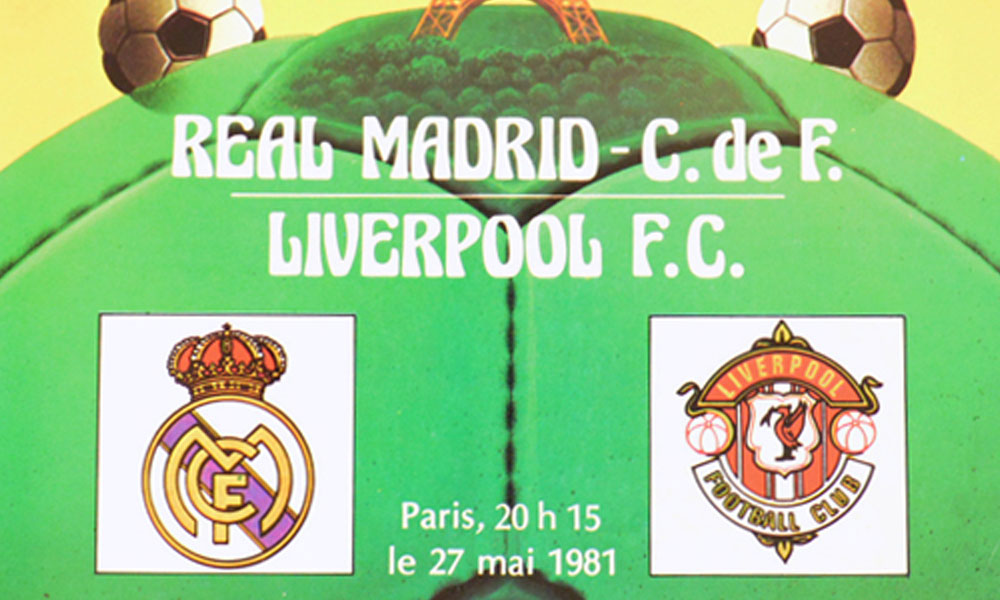
Real Madrid v Liverpool 27.05.1981 - European Cup Final
-

Man Utd v Benfica 29.05.1968 (European Cup Final inc Ticket)
-

Forest v Malmo 30.05.1979 (European Cup Final)
-

Liverpool v Brugues 10.05.1978 - European Cup Final


Nottingham Forest Silence Cologne
Nottingham Forest’s rise under Brian Clough produced another unforgettable away performance. In the 1979 European Cup semi-final, Forest drew 3–3 with Cologne at the City Ground after falling two goals behind.
Because Cologne had scored three away goals, Forest travelled to West Germany knowing they needed an exceptional result. Ian Bowyer’s goal secured a 1–0 victory and sent Forest into the final.
The Cologne programme marks a night when a club relatively new to European competition displayed remarkable composure. Forest went on to defeat Malmö in Munich and retained the trophy against Hamburg the following season.
Old football programmes from Forest’s European campaigns are especially collectable because they document one of the game’s most rapid transformations from domestic outsiders to continental champions.
Arsenal’s Long Road to Belgrade
Eastern Bloc away days could involve complicated travel, unfamiliar conditions and tightly controlled surroundings. Arsenal experienced this during the club’s successful 1969–70 Inter-Cities Fairs Cup campaign.
The road to the final included difficult trips to Glentoran, Sporting Lisbon, Rouen, Dinamo Bacău and Ajax. Arsenal then faced Anderlecht in the two-legged final, losing 3–1 in Brussels before winning 3–0 at Highbury.
Programmes from these away fixtures help tell the story of a competition that is sometimes overlooked beside the European Cup. They also show how British clubs gradually became more accustomed to the tactical and logistical demands of continental football.
Less glamorous ties can sometimes produce scarcer programmes, particularly when only a small number of British supporters travelled.
West Ham Meet Dinamo Tbilisi
West Ham United’s 1981 Cup Winners’ Cup quarter-final against Dinamo Tbilisi captured the quality of football emerging from the Soviet Union. Dinamo delivered an outstanding performance to win 4–1 at Upton Park, receiving generous applause from the home crowd.
West Ham restored pride by winning the second leg 1–0 in Tbilisi, although the deficit was far too great to overcome. The away programme remains an intriguing item because it records a rare British victory in the Georgian capital during the Soviet era.
Programmes from Eastern Bloc countries are often visually distinctive. Cyrillic lettering, unfamiliar crests and state-controlled advertising give them a character unlike British publications of the same period.
Aberdeen’s Journey to European Glory
Aberdeen’s 1982–83 Cup Winners’ Cup campaign produced some of the finest away days in Scottish club football. Alex Ferguson’s team eliminated Bayern Munich in a famous quarter-final before defeating Belgian side Waterschei in the semi-final.
The final against Real Madrid took place in Gothenburg, where Aberdeen won 2–1 after extra time. The official programme is one of the most celebrated pieces of Aberdeen football memorabilia.
Away issues from the earlier rounds, however, reveal the complete scale of the achievement. Programmes from matches against Lech Poznań, Bayern Munich and Waterschei chart the progress of a young side that repeatedly overcame more experienced continental opponents.
Why European Away Programmes Stand Apart
European away programmes frequently survive in smaller numbers than domestic issues. Fewer British supporters attended, and publications produced overseas were less likely to return home in good condition.
Language, printing style and local customs varied considerably. Some programmes were substantial magazines; others contained only a few pages. Ticket stubs, travel itineraries, ferry documents and supporters’ club notices can add valuable context to a collection.
The most rewarding football programme collections do not simply focus on finals. They follow complete campaigns, including obscure early rounds, difficult defeats and the away legs that made later comebacks possible.
Souvenirs of Football Beyond Britain
Old football programmes from European trips preserve an era when travelling abroad required determination and uncertainty was part of the attraction. Supporters crossed borders without mobile phones, online maps or constant match updates, returning with programmes that proved they had been there.
From Manchester United’s brilliance in Lisbon to Celtic’s triumph, Forest’s victory in Cologne and Aberdeen’s night in Gothenburg, these publications tell stories of ambition far beyond domestic football.
As football memorabilia, they capture more than results. They preserve the languages, stadiums, journeys and emotions that turned European competition into one of the game’s greatest adventures.
Key match details were checked against UEFA’s historical records, including Manchester United’s 5–1 victory at Benfica, Celtic’s 1967 triumph and Nottingham Forest’s semi-final win in Cologne.