
The 1970s were among the most dramatic years in British football history. The decade produced brilliant players, unforgettable cup finals, packed terraces and the growing excitement of European competition. It was also a period shaped by economic uncertainty, industrial unrest, crowd disorder and increasing concern about stadium safety.
Football programmes from the 1970s capture both sides of the era. Their colourful artwork and enthusiastic match previews reflect the romance of the game, while club statements, public notices and changing advertisements reveal the tensions affecting football and wider British society.
For collectors, these programmes are more than souvenirs. They are printed records of a sport experiencing rapid cultural, commercial and social change.
A Decade of Bold Programme Design
Many football programmes of the 1970s are instantly recognisable because of their striking covers. Clubs increasingly moved away from the restrained designs of earlier decades and experimented with bright colours, cartoons, painted action scenes and dramatic typography.
Some programmes featured detailed illustrations of star players, while others used bold geometric patterns or club crests presented in modern graphic styles. The influence of contemporary advertising, album artwork and magazine design was clear.
Cup final programmes became particularly ambitious. They were often larger, more colourful and packed with photographs, statistics and historical features. These publications were designed not merely to inform supporters but to serve as permanent keepsakes.
The artistic variety helps make 1970s football programmes especially enjoyable to collect. Even ordinary league issues can have distinctive designs that reflect the visual character of the decade.
The 1970 FA Cup Final and a Changing Rivalry
One programme that immediately defines the period is the 1970 FA Cup Final issue for Chelsea against Leeds United. The first match at Wembley ended in a 2–2 draw, before Chelsea won the replay 2–1 at Old Trafford.
The two programmes represent one of the most famous and fiercely contested finals in English football history. They also recall a time when replays were accepted as part of major cup competitions rather than being viewed as an inconvenience.
Chelsea and Leeds represented contrasting football identities, and their rivalry captured the intensity of the period. The programmes provide team information, player profiles and photographs from an era remembered for physical challenges, muddy pitches and enormous national interest in the FA Cup.
For collectors, owning both the Wembley programme and the Old Trafford replay issue creates a more complete record of the event.
-

Chelsea v Leeds 11.04.1970 - FA Cup Final (with ticket)
-

Arsenal v Sunderland 07.04.1973 - FA Cup Semi Final 2-1
-

1970 Mexico World Cup Tournament Programme
-

Man Utd v Southampton 01.05.1976 - FA Cup Final


European Adventure Becomes Established
European football was no longer a novelty by the 1970s. British clubs regularly reached major finals, and programmes from continental matches became increasingly desirable.
Celtic, Leeds United, Liverpool, Nottingham Forest, Manchester City, Chelsea and other British clubs all enjoyed significant European campaigns during the decade. Their programmes document meetings with teams that many supporters had previously known only through newspaper reports.
Liverpool’s UEFA Cup victories in 1973 and 1976, followed by European Cup success in 1977 and 1978, marked the club’s emergence as a dominant continental force. Programmes from finals against Borussia Mönchengladbach and Club Brugge are central items for collectors of Liverpool memorabilia.
Nottingham Forest’s 1979 European Cup final against Malmö provides another defining issue. Under Brian Clough, Forest completed one of football’s most remarkable rises, progressing from the Second Division to champions of Europe in only a few seasons.
Industrial Unrest on the Printed Page
The 1970s were shaped by strikes, inflation, power shortages and wider economic difficulties. Football could not escape these conditions, and evidence of national uncertainty sometimes appeared inside matchday programmes.
Printing and distribution could be affected by industrial action. Clubs occasionally referred to production difficulties, travel disruption or altered match arrangements. Rising costs influenced programme prices, ticket charges and the advertisements placed by local businesses.
The energy crisis of the early 1970s also affected evening entertainment and working life throughout Britain. Floodlit football depended on reliable power, while transport problems could make it difficult for supporters to attend matches.
These references are important because they connect football with everyday life. A programme might celebrate a new signing on one page and carry a practical announcement about transport or costs on another. This contrast gives collectors a direct glimpse of the uncertainty surrounding the sport.
Crowd Trouble and Safety Concerns
Terrace culture remains part of the romance associated with 1970s football, but the decade also brought serious concerns about crowd behaviour and stadium safety.
Programmes increasingly carried messages asking supporters to behave responsibly, avoid entering the pitch and cooperate with police and stewards. Warnings about bottles, fireworks and offensive conduct became more common as clubs tried to manage disorder.
Segregation between home and away supporters became increasingly established. Stadium announcements, ticketing arrangements and programme notices reflected the changing way in which large crowds were controlled.
Safety was another growing issue. Many grounds were old, with narrow entrances, limited facilities and large standing terraces. The 1971 Ibrox disaster, in which 66 people lost their lives, forced football to confront the dangers associated with overcrowding and inadequate stadium design.
Programmes produced after major incidents sometimes included tributes, safety instructions or explanations of ground improvements. These details make them powerful historical documents, recording a period when football authorities were under pressure to protect supporters more effectively.
The Romance of the FA Cup
Despite the decade’s difficulties, the FA Cup retained enormous prestige. Final day was one of the biggest occasions in the British sporting calendar, and the official programme was an essential souvenir.
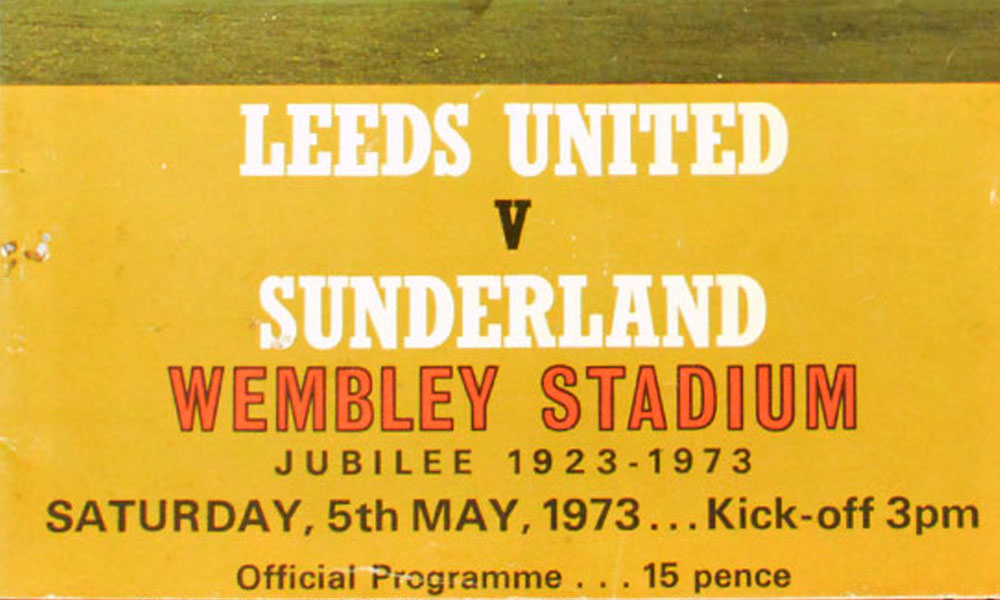
Sunderland’s victory over Leeds United in 1973 remains one of the competition’s greatest shocks. As a Second Division club, Sunderland were clear underdogs, but Ian Porterfield’s goal and Jim Montgomery’s famous saves secured an unforgettable win.
The 1973 final programme is highly collectable because it represents the enduring possibility of an outsider defeating one of the country’s strongest teams.
Other defining issues include Southampton’s 1976 victory over Manchester United, Ipswich Town’s win against Arsenal in 1978 and Arsenal’s dramatic 1979 final against Manchester United. That match, remembered for three late goals, became known as the “Five-Minute Final”.
Programmes That Define the Era
A collection representing the 1970s could include both programmes from the 1970 Chelsea versus Leeds FA Cup Final, Sunderland’s 1973 Wembley victory and Liverpool’s first European Cup final in 1977.
The 1978 and 1979 European Cup final programmes chart the continued success of Liverpool and Nottingham Forest. Domestic collectors might also seek Arsenal’s 1971 Double-winning final, Manchester United’s 1977 FA Cup triumph and the memorable Arsenal versus Manchester United programme from 1979.
World Cup programmes also deserve attention. The 1970 tournament in Mexico featured Brazil’s celebrated team, while the 1974 and 1978 competitions reflected the growing global appeal of televised international football.
Paper Memories of a Turbulent Decade
Football programmes of the 1970s preserve the colour, noise and contradictions of the era. Their covers celebrate famous players and glorious victories, while their pages reveal concerns about money, disorder, travel and safety.
They record a time when enormous crowds still gathered on traditional terraces and cup football could dominate national conversation. At the same time, they show a sport being forced to address problems that could no longer be ignored.
For anyone interested in football history, these programmes offer an unusually vivid portrait of the decade. They capture British football at its most romantic and most troubled, preserving the excitement and uncertainty of the 1970s in print.