
Scotland international programmes tell one of the most emotional stories in football history. They record famous victories, painful near-misses, ambitious World Cup campaigns and the extraordinary journeys made by generations of travelling supporters.
From historic Hampden Park fixtures to matches in South America, Scandinavia and continental Europe, these programmes chart the development of the Scotland national team and the growth of the Tartan Army. Some commemorate celebrated performances, while others preserve memories of tournaments that ended in disappointment despite moments of genuine promise.
For collectors building football programme collections, Scotland internationals offer a rich combination of sporting significance, attractive designs and powerful nostalgia.
Hampden Park and Scotland’s Home Programme Tradition
For much of the twentieth century, Hampden Park was one of the great stages of world football. Scotland internationals attracted enormous crowds, particularly when England visited for the annual Home Championship fixture.
Programmes from these matches are important records of a period when Scotland versus England was one of the most eagerly anticipated games in the international calendar. They often featured patriotic cover designs, player portraits and detailed records of previous meetings between the countries.
Earlier issues were generally simple and formal, but programmes became more colourful and substantial during the 1960s and 1970s. Collectors can follow changing styles through the use of photography, typography and national symbols.
Home programmes are often easier to locate than rare overseas issues, making them an ideal starting point for a Scotland collection. Condition remains important, particularly for programmes from matches attended by exceptionally large crowds, where folding and handwritten team changes were common.
The Wembley Wizards of 1967
One of the most desirable Scotland away programmes is associated with the famous victory over England at Wembley in April 1967. England had won the World Cup the previous year and had not been defeated since lifting the trophy.
Scotland’s 3–2 success therefore carried enormous symbolic importance. Goals from Denis Law, Bobby Lennox and Jim McCalliog secured the victory, while Jim Baxter produced a performance that became part of Scottish football folklore.
The match programme is a natural centrepiece for football programme collections devoted to Scotland. It represents not only a famous result but also the confidence and character of a gifted Scottish side.
Although Scotland were unofficially described as world champions following the victory, the match was part of the Home Championship rather than a global tournament. That distinction has done little to reduce its place in football history or its appeal to collectors.
The 1954 World Cup Adventure
Scotland made their World Cup debut in Switzerland in 1954. The tournament was a difficult experience, with defeats against Austria and Uruguay bringing an early exit, but the surviving programmes remain historically significant.
Programmes from Scotland’s first World Cup matches mark the beginning of the national team’s long and complicated relationship with the competition. Overseas tournament issues can be harder to find than domestic internationals, particularly in good condition.
Collectors should be alert to differences between official tournament publications, individual match programmes and later souvenir editions. Original items may contain signs of use such as scores, team changes or travel folds, but these features can also provide a direct connection to the supporter who attended the match.
The 1954 programmes may not celebrate Scottish success, yet they document an essential starting point in the country’s World Cup story.
-

England v Scotland 15.04.1967
-

Scotland v Uruguay 19.06.1954
-

Austria v Scotland 16.06.1954
-

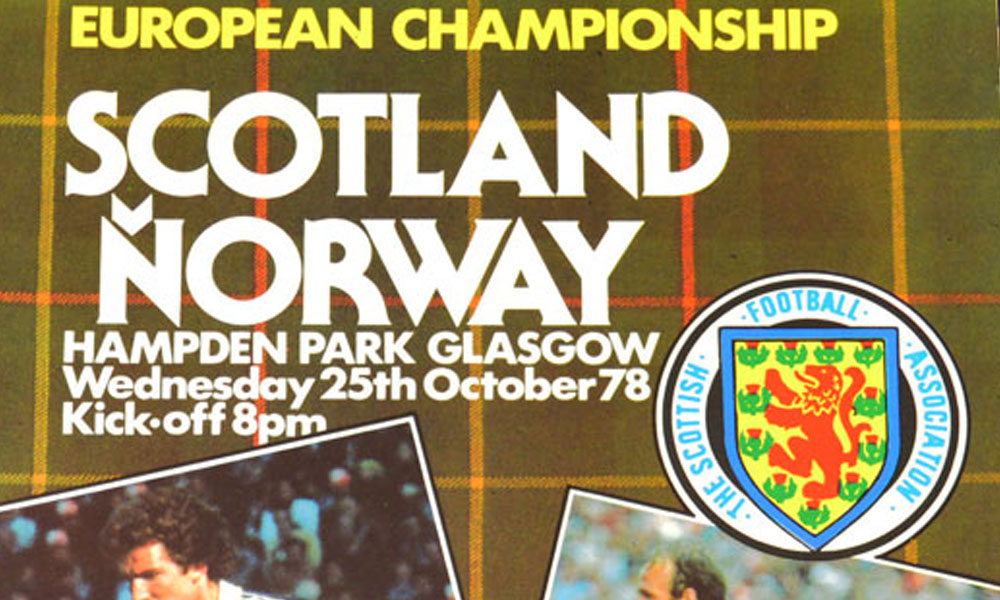
Scotland v Norway 25.10.1978


West Germany 1974 and an Unbeaten Exit
The 1974 World Cup remains one of Scotland’s most frustrating near-misses. Willie Ormond’s team completed the group stage unbeaten but were eliminated on goal difference.
Scotland defeated Zaire and drew with Brazil and Yugoslavia. The results demonstrated that the team could compete with strong international opponents, but a narrow margin prevented progression to the next stage.
Programmes from the tournament are particularly attractive to collectors because they feature a memorable Scotland squad containing Kenny Dalglish, Billy Bremner, Joe Jordan, Peter Lorimer and Denis Law.
The Brazil match is among the standout issues. Facing the reigning world champions gave the fixture immediate importance, while the goalless draw contributed to Scotland’s proud but ultimately unsuccessful campaign.
A complete collection of Scotland’s 1974 World Cup programmes provides a compact record of a team that returned home without losing but still failed to qualify.
Argentina 1978: Expectations and Disappointment
Few Scotland campaigns have generated greater anticipation than the journey to Argentina in 1978. Manager Ally MacLeod expressed enormous confidence, and supporters travelled in large numbers believing the team could make a serious impact.
The tournament began badly with defeat against Peru, followed by a draw against Iran. Scotland then produced one of their finest World Cup performances by defeating the Netherlands 3–2, with Archie Gemmill scoring a remarkable individual goal.
Once again, however, Scotland were eliminated on goal difference. Programmes from the three group games capture the full emotional range of the campaign, from optimism and disappointment to the thrilling final victory.
The Netherlands issue is especially sought after because of Gemmill’s goal and the enduring fame of the match. Yet collecting all three programmes tells the more complete story of a tournament defined by ambition, turmoil and another narrow failure.
Spain 1982 and Mexico 1986
Scotland reached a third consecutive World Cup in Spain in 1982. The team defeated New Zealand, lost to Brazil and drew with the Soviet Union, once again leaving the tournament on goal difference.
Programmes from these fixtures feature players including Graeme Souness, Alan Hansen, Kenny Dalglish, Joe Jordan and John Wark. The Brazil programme is particularly appealing because Scotland briefly led before the tournament favourites recovered to win convincingly.
At Mexico 1986, Scotland faced Denmark, West Germany and Uruguay. The campaign ended without a victory, although the goalless draw against Uruguay offered one final opportunity to qualify.
The programme from that match recalls a tense and controversial fixture in which Uruguay had a player dismissed during the opening minute. Despite playing against ten men for almost the entire game, Scotland could not find the decisive goal.
France 1998 and the World Cup’s Opening Match
Scotland’s most recent World Cup appearance came in France in 1998. The team were given the honour of facing reigning champions Brazil in the opening match of the tournament.
A late own goal gave Brazil a 2–1 victory after John Collins had equalised from the penalty spot. Scotland then drew with Norway before losing to Morocco and exiting at the group stage.
Programmes from France 1998 appeal to a generation of supporters who remember the optimism surrounding Craig Brown’s squad. The Brazil issue is particularly collectable because it combines Scotland interest with the official opening of a major tournament.
The campaign has gained additional historical importance as Scotland’s absence from subsequent World Cups has continued.
Qualifiers, Friendlies and Tartan Army Travels
World Cup finals are not the only source of desirable Scotland programmes. Qualifying matches often carry their own historical significance, particularly those played in less familiar locations.
Away programmes from decisive fixtures can be difficult to obtain because fewer Scottish supporters attended and print runs were sometimes limited. Issues from Eastern Europe, the former Soviet Union and smaller football nations may therefore command strong interest.
Famous friendlies also deserve attention. Matches against Brazil, Argentina, France and other leading nations brought world-class players to Hampden and sent Scotland supporters abroad.
These programmes document the growth of the Tartan Army as one of international football’s most recognisable travelling supports. Ticket stubs, travel documents and newspaper reports can make excellent additions to programme displays.
Building a Scotland International Collection
A focused collection might begin with a particular World Cup, manager or generation of players. Others may choose every Scotland versus England programme, all competitive home internationals or programmes from matches attended personally.
Condition, rarity and historical importance all influence value, but emotional significance is equally important. A relatively common programme can become a treasured possession when connected to a family memory or unforgettable journey.
Classic Scotland international programmes preserve triumph, heartbreak and hope in equal measure. Together, they create a paper record of the national team’s adventures and the supporters who followed it, ensuring that the travels and near-misses of the Tartan Army remain an enduring part of football history.