
The 1930s were one of the most fascinating decades in British football. In England, Arsenal rose to become the dominant club of the age, Sunderland and Everton produced powerful championship sides, and the FA Cup continued to create national sporting occasions at Wembley. In Scotland, Rangers remained the strongest league force, Celtic delivered memorable title and cup successes, and Motherwell enjoyed one of the finest periods in their history.
For collectors, old football programmes from the 1930s are especially appealing because they sit in a rich historical period. They are pre-war items, often fragile, increasingly scarce and full of period character. Many have bold typography, local advertising, simple team line-ups, club notes and match previews that capture football before television transformed the game.
These rare football programmes are not just souvenirs. They are paper witnesses to the last full decade of league football before the Second World War changed everything.
Arsenal and the Great English Dynasty
The biggest English football story of the 1930s was Arsenal. Under Herbert Chapman, then Joe Shaw and George Allison, the club became the defining force of the decade. Arsenal won the First Division title in 1930/31, 1932/33, 1933/34, 1934/35 and 1937/38, creating one of the great dynasties in English football history.
For collectors, Arsenal programmes from this period are highly desirable. Fixtures from title-winning seasons carry obvious appeal, especially matches against leading clubs such as Aston Villa, Everton, Sunderland, Huddersfield Town, Derby County and Manchester City. Programmes from Highbury also have strong visual and historical attraction because Arsenal were becoming a model modern club.
The 1930 FA Cup Final programme, when Arsenal beat Huddersfield Town, is particularly important because it marked Arsenal’s first major trophy. It also links Herbert Chapman’s two great English clubs, as he had previously built Huddersfield into champions during the 1920s. Any programme involving Arsenal in the early 1930s can attract attention, but cup finals, title run-in fixtures and games featuring famous names such as Alex James, Cliff Bastin, David Jack and Eddie Hapgood are especially collectable.
Everton, Dixie Dean and the Power of Star Players
Everton entered the 1930s with one of the most famous forwards in football history: Dixie Dean. The club won the First Division title in 1931/32 after having been in the Second Division the previous season, making it one of the most striking rebounds of the era.
Everton programmes from the early 1930s appeal because they combine a major club, a title-winning season and a legendary goalscorer. Collectors often look for programmes where Dean appeared, particularly against leading opposition or in significant league matches. His reputation means even otherwise ordinary Everton fixtures from this period can carry extra interest.
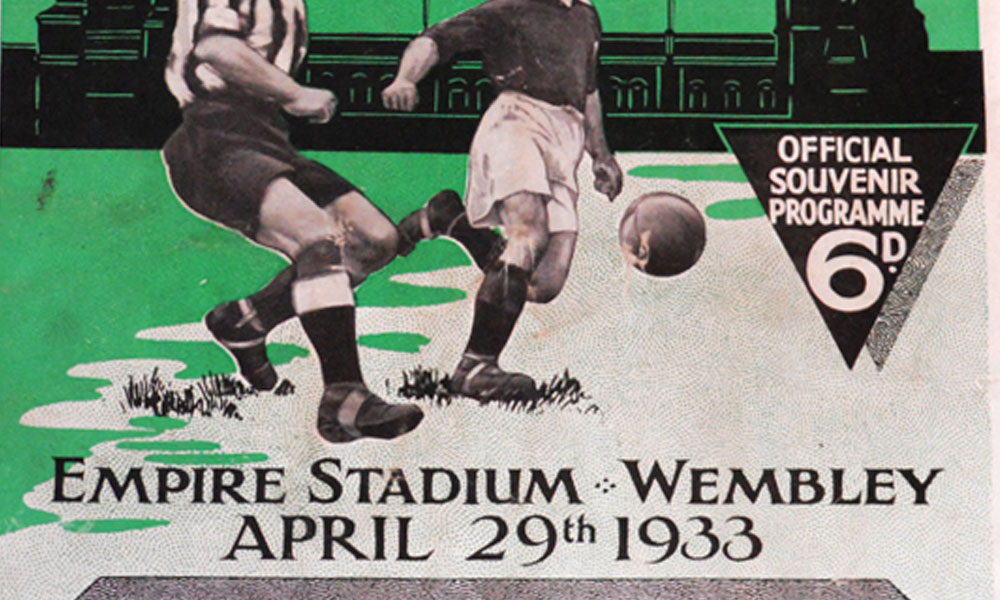
The 1933 FA Cup Final programme is another major Everton item. Everton beat Manchester City 3-0 at Wembley, and the final is remembered partly because numbered shirts were used, helping the crowd identify players more easily. This gives the programme added historical value beyond the result itself.
-

Everton v Arsenal 26.12.1936
-

Everton v Liverpool 16.02.1938
-

Everton v Arsenal 16.11.1935
-
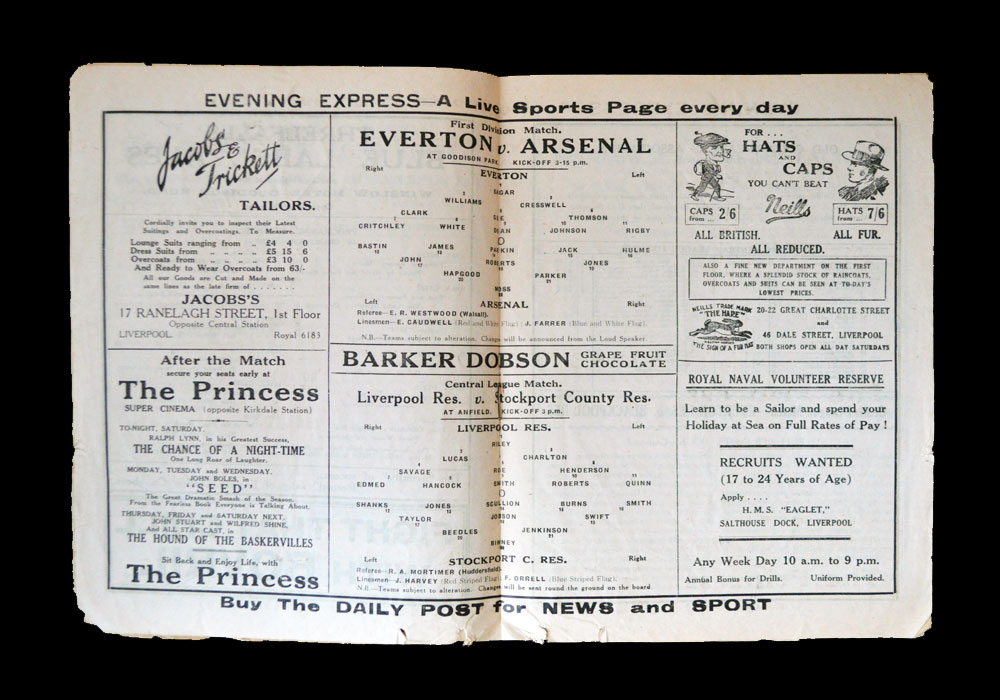
Everton v Arsenal 06.02.1932


Sunderland’s Brilliant Mid-Decade Side
Sunderland were another major force in 1930s English football. They won the First Division title in 1935/36 and followed it with FA Cup glory in 1937, beating Preston North End 3-1 in the final. This period featured outstanding players such as Raich Carter and Bobby Gurney, and Sunderland’s attacking football made them one of the great sides of the age.
Old football programmes from Sunderland’s championship season are highly collectable, particularly games against Arsenal, Everton, Manchester City, Derby County and local rivals Newcastle United. The 1937 FA Cup Final programme is also a key item, linking Sunderland’s league strength with their Wembley success.
For collectors of rare football programmes, Sunderland material from this period has the benefit of story and scarcity. The club were at a peak, yet surviving programmes from provincial league fixtures are often harder to find in excellent condition than more obvious Wembley issues.
FA Cup Finals and Wembley Collectables
The FA Cup remained the showpiece occasion of English football throughout the 1930s. Wembley finals from the decade are among the most popular collecting routes, partly because they are easy to understand as historical landmarks and partly because each final has a self-contained story.
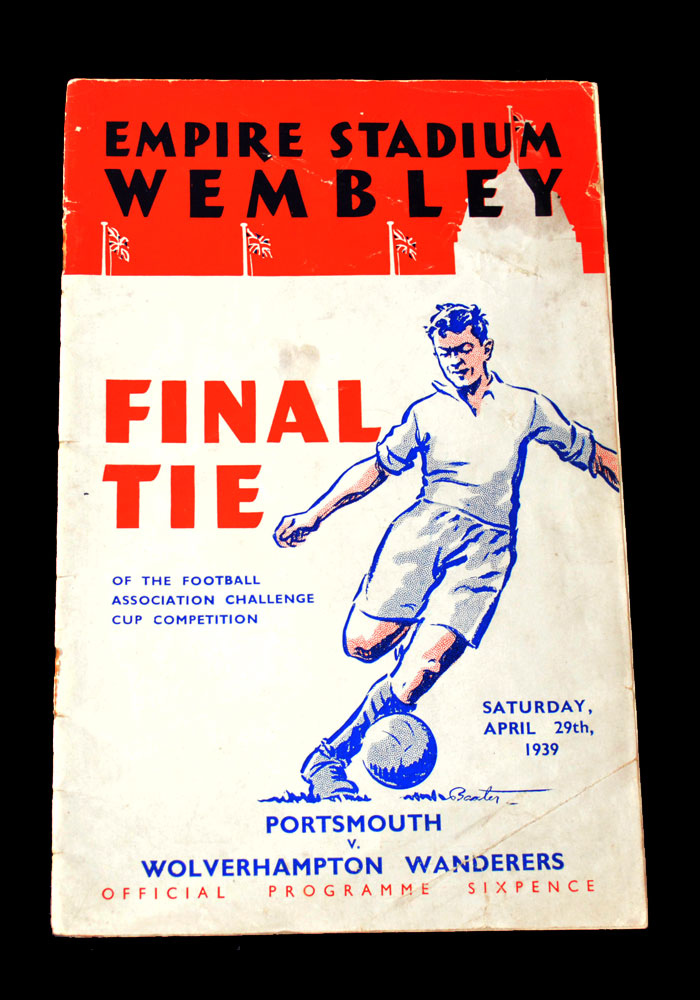
Arsenal’s 1930 and 1936 final victories, Everton’s 1933 win, Manchester City’s 1934 triumph, Sunderland’s 1937 success, Preston North End’s 1938 victory and Portsmouth’s 1939 cup win all produce programmes with strong collector appeal. The 1939 FA Cup Final programme is especially evocative because it came only months before the outbreak of war. Portsmouth’s win over Wolverhampton Wanderers became the last FA Cup Final before wartime interruption.
Collectors often value cup final programmes because they were kept as special souvenirs, but condition still varies greatly. Creases, rusty staples, annotations and folds are common. A clean, complete 1930s Wembley programme remains a strong addition to any football memorabilia collection.
-
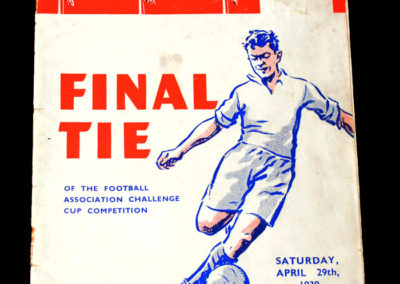
FA Cup Final - Portsmouth v Wolves 29.04.1939 hot favourites lose 4-1. The monkey gland injections dont work.
-

FA Cup Final Everton v Man City 29.04.1933
-

FA Cup Final Birmingham v West Brom 25.04.1931
-

FA Cup Final - Sheff Wed v West Brom 27.04.1935


Scotland: Rangers, Celtic and Motherwell’s Great Moment
In Scotland, Rangers dominated much of the decade, winning multiple league titles and Scottish Cups. Rangers programmes from title seasons are always popular, particularly Old Firm fixtures and cup ties at Ibrox or Hampden. Matches against Celtic, Hearts, Aberdeen and Motherwell are especially attractive because they reflect the strongest Scottish football stories of the period.
Celtic also had major moments, including league titles in 1935/36 and 1937/38. The 1937 Scottish Cup Final is one of the most famous Scottish football occasions of the decade, with Celtic beating Aberdeen 2-1 at Hampden in front of an enormous crowd. A programme from that final is a major Scottish collectable, valued for both the match and the atmosphere surrounding it.
Motherwell deserve special attention too. Their 1931/32 league title remains one of the great non-Old Firm achievements in Scottish football. Programmes from that campaign, especially Motherwell fixtures against Rangers and Celtic, are among the most interesting Scottish league items of the decade. They represent a rare moment when a club outside Glasgow’s big two rose to the very top.
Which 1930s Programmes Are Most Collectable?
The most collectable 1930s programmes usually fall into several groups. First are major cup finals: FA Cup Finals, Scottish Cup Finals and significant semi-finals. These are popular because they are easy to identify and often mark famous days in club history.
Second are title-season league programmes. Arsenal from the early and mid-1930s, Everton in 1931/32, Sunderland in 1935/36, Rangers title years, Celtic title years and Motherwell’s 1931/32 campaign all offer strong collecting potential.
Third are programmes involving famous players. Dixie Dean, Alex James, Cliff Bastin, Raich Carter, Hughie Gallacher, Bob McPhail, Jimmy McGrory and other leading names can lift the appeal of a fixture. Player interest is particularly important when the game itself was not a cup final or title decider.
Fourth are local derbies and intense rivalries. Arsenal v Tottenham, Everton v Liverpool, Manchester City v Manchester United, Newcastle v Sunderland, Rangers v Celtic, Hearts v Hibernian and Dundee derbies all have extra collector interest.
Finally, wartime-edge programmes from 1938/39 carry an added atmosphere. They belong to the final season before the normal football calendar was suspended, giving them a special place in football memorabilia history.
The Paper Trail Before War Changed the Game
The 1930s remain a superb decade for collectors because the programmes combine sporting quality, scarcity and historic weight. They capture Arsenal’s dominance, Sunderland’s brilliance, Everton’s star power, Rangers’ strength, Celtic’s Hampden drama and Motherwell’s rare league triumph.
For anyone browsing old football programmes on 10footballs.com, the decade offers a wide range of collecting routes. You can follow a club, a cup run, a famous player, a rivalry or a complete season. The best rare football programmes from the 1930s are not simply old pieces of paper. They are surviving fragments of a football world that was confident, crowded, passionate and about to be changed forever by history.