
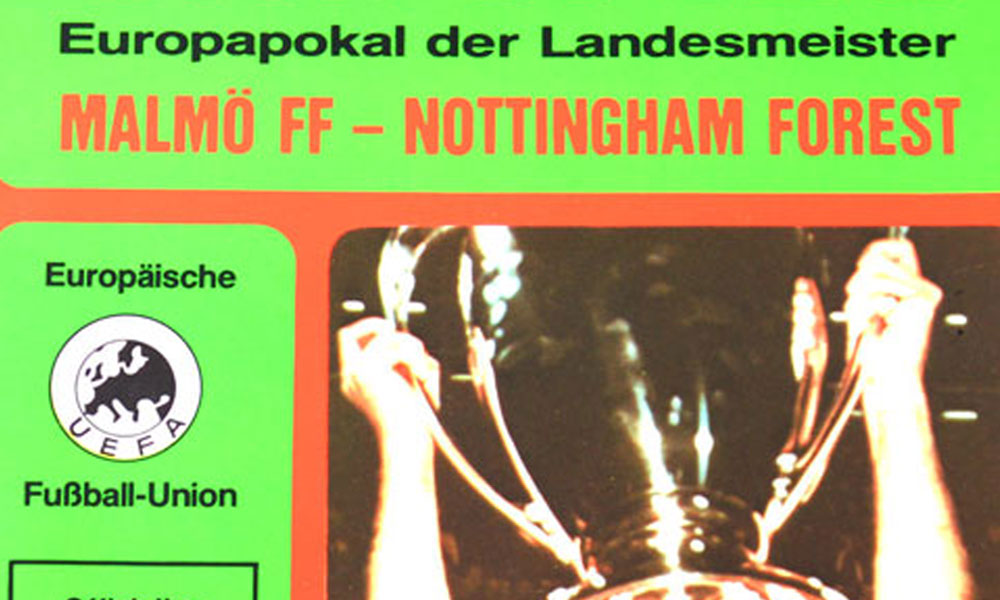
Nights Under the Floodlights
There is something special about a European final that feels different from any other match in the football calendar. Domestic cup finals have their own place, and league deciders can be dramatic in their own right, but the European Cup and, later, the Champions League created a different sort of stage. These were the nights when clubs carried not only their own history, but also the hopes of cities, countries and generations of supporters into a single floodlit occasion. For collectors, that sense of occasion lives on in the programmes.
From the first European Cup final in Paris in 1956 through to the glossy modern Champions League era, final programmes have captured more than line-ups and match details. They hold the visual language of their time, the glamour of the host city, the confidence of the competition and the feeling that this was football presented at its grandest. UEFA’s own archive traces final programmes all the way back to Real Madrid v Reims in 1956, while 10 Footballs rightly emphasises that programmes preserve the tone, design and atmosphere of football history in a way tickets alone cannot.
Why European final programmes feel different
Collectors are often drawn to finals anyway, but European finals bring an extra layer. A league match programme belongs to a season. A domestic cup final belongs to a country. A European final belongs to a wider football world. The venue changes, the languages shift, the design styles vary and the sense of occasion becomes far more theatrical.
That is part of what makes these issues so appealing in a football programme collection. They are not simply club memorabilia. They are souvenirs from football’s grand continental theatre. The covers alone can tell you a great deal. Early issues often feel restrained and elegant, reflecting the formal style of post-war football presentation. Later programmes become bolder, more colourful and more commercial, mirroring the transformation of the game itself. Across every era, though, the best ones still feel like artefacts from a very specific night.
The early European Cup years
The first European Cup final, played between Real Madrid and Reims at the Parc des Princes in Paris on 13 June 1956, sits at the beginning of the whole story and naturally occupies a special place in collecting terms. It was the first final of a competition that would grow into the biggest club prize in world football, and that alone gives the programme enormous significance. Auction and football memorabilia listings underline just how scarce and desirable original examples have become.
What makes the earliest European Cup final programmes so compelling is not only rarity, but atmosphere. These were the years when the competition still felt new, almost experimental, yet already glamorous. The clubs involved were helping invent the mythology of the European night as they went. In programme form, that gives collectors something more than paper. It gives them football at the moment it was learning how to present itself as an international spectacle.
When British clubs entered the picture
For British collectors, the attraction deepens once finals involving clubs from these shores arrive more regularly in the story. Celtic’s 1967 triumph, Manchester United’s 1968 win at Wembley, Nottingham Forest’s back-to-back successes and Liverpool’s great European years all helped make final programmes emotionally resonant as well as historically important.
Liverpool’s 1977 victory over Borussia Mönchengladbach in Rome is a good example. It was Liverpool’s first European Cup final and first triumph in the competition, a landmark moment in both club and English football history. Matches like that tend to elevate a programme from souvenir to trophy in its own right, because the issue becomes tied forever to a decisive change in a club’s story.
That is often the point at which a final programme stops being merely collectible and becomes iconic. It is not only that it is old or rare. It is that it represents a first, a breakthrough, a famous upset or a defining era.
-

Liverpool v Bruges 10.05.1978 (European Cup FInal) (DT was there)
-

Real Madrid v Liverpool 27.05.1981 - European Cup Final
-
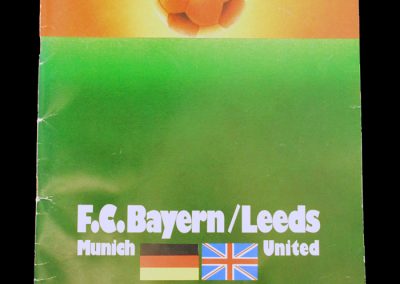
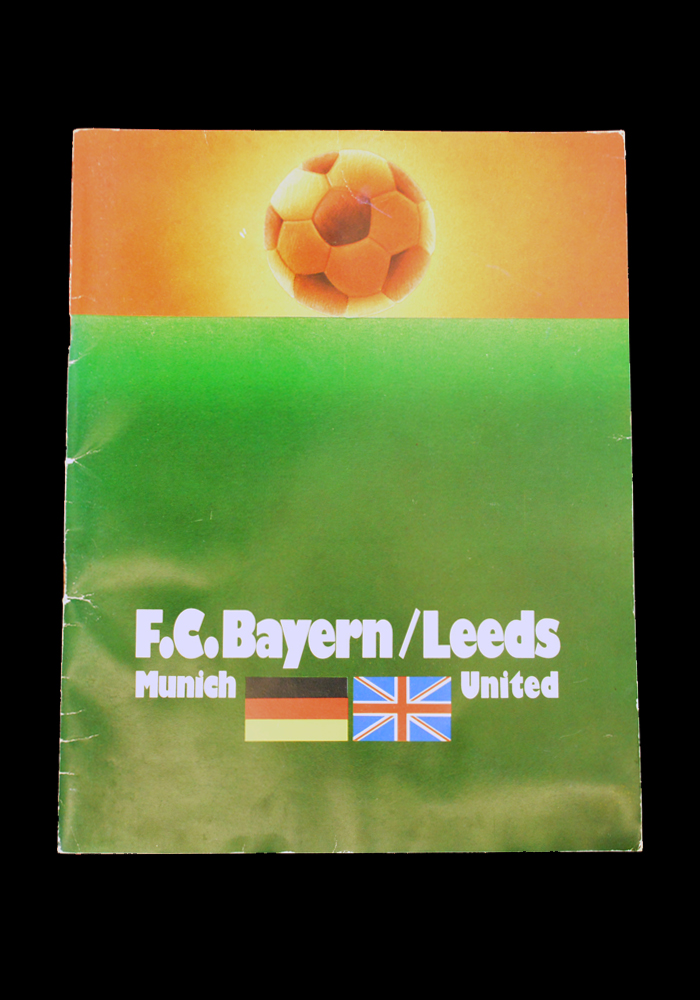
Leeds v Bayern Munich 28.05.1975 - European Cup FInal
-

Man Utd v Benfica 29.05.1968 (European Cup Final inc Ticket)



From the European Cup to the Champions League
The competition’s rebranding from the European Cup into the UEFA Champions League in the early 1990s changed the feel of final programmes as much as it changed the tournament itself. Reuters notes the competition’s shift in 1992, and the modern final programme quickly became a more polished, corporate and internationally marketed object.
Some collectors prefer the earlier European Cup issues for their relative simplicity and sense of old-world occasion. Others enjoy the Champions League era because the programmes become visually richer, more confident and more obviously designed as prestige items. In truth, both periods have their appeal. The older issues tend to feel rarer and more historically delicate. The modern ones often do a better job of announcing the sheer scale of the event.
What links them is the sense that the final is never just another fixture. The programme has to rise to meet the night.
Which issues become true trophies?
Not every final programme becomes a crown jewel. Some are easier to find, some are tied to less celebrated finals, and some simply do not stir the imagination in quite the same way. The true trophies are usually the ones that combine several qualities at once.
The first category is obvious: firsts. The 1956 final programme will always matter because it was the beginning. The same logic applies to first triumphs for major clubs, or the first European Cup won by a club from a particular country.
The second category is programmes from famous finals that live strongly in football memory. Finals remembered for drama, upsets, legendary players or epoch-defining teams tend to lift their associated programmes with them.
The third category is scarcity. Some issues survive in lower numbers, especially older finals, and that matters enormously in a collecting market. But scarcity alone is not enough. The issue also needs story, beauty or symbolic weight.
That is why the most prized football programmes are so often attached to nights that already feel immortal.
Design, host cities and the glamour factor
One of the pleasures of collecting European final programmes is the variety of styles produced by different host cities and eras. Domestic programmes often sit within a club’s familiar identity. European final issues, by contrast, often carry the stamp of a stadium, a city and UEFA’s vision of the occasion.
Paris, Rome, Amsterdam, Wembley, Madrid, Munich and Istanbul all bring their own associations. Even before you open the programme, the cover can suggest the kind of night it was meant to be: formal, modern, celebratory, dramatic. That is a big part of the glamour. The programme is not just about who played. It is about where football imagined itself to be at its grandest.
Why collectors keep coming back to them
For anyone serious about football programme collection, European Cup and Champions League final issues offer a perfect blend of history, design and emotion. They connect clubs to continents, individual matches to whole eras and personal memories to the broader sweep of football history.
They also remind us that football under the floodlights has always sold a dream. The programme is part of that dream. It is the object that says this was not only a match, but an event worthy of ceremony, print and preservation.
That is why the best of these issues are never just paperwork from old games. They are trophies in paper form, carried home from the greatest club nights of all.