
For many collectors, the first instinct is to chase the obvious prizes. Cup finals, title deciders, famous internationals and big-club issues naturally draw attention. They are glamorous, instantly recognisable and often central to the wider story of the game. But a collection built only around the grandest occasions can miss something just as important: the texture of football life further down the pyramid.
That is where non-league and lower-division programmes come into their own. They may not always have the polish of a major final, and they may not carry the same instant prestige as a programme from Wembley or a European night, but they often offer something richer in human terms. They preserve local rivalries, eccentric grounds, volunteer-run clubs, hard winters, long coach journeys and the sense of a football world that television has only ever partly captured. That collector-first, history-led view of programmes as “windows into football history” sits very naturally with the way 10 Footballs presents the subject.
Why the lower reaches tell the fuller story
Top-flight football tends to dominate memory because it dominates coverage. The best players, biggest clubs and most dramatic trophies are discussed endlessly. Yet the game’s real spread has always gone far beyond the top division. Across towns, villages and industrial communities, lower-league and non-league football has long provided the weekly rhythm of local sporting life.
Programmes from that level preserve details that larger narratives often leave out. They show how clubs described themselves, how they appealed to supporters, which local firms bought advertising space and what the football mood of a place felt like at a specific moment. 10 Footballs rightly notes that programmes capture manager’s notes, local businesses, design fashions and the “tiny details” that make each issue unique. Those qualities are especially striking in lower-level issues, where the connection between club and community is often at its most direct.
Local rivalries are often better on paper than on television
One of the strongest arguments for collecting outside the glamour tiers is rivalry. Some of the fiercest and most enduring football tensions are not between globally famous clubs at all. They are between neighbours, former workmates, market towns, dock communities or clubs divided by only a short bus ride.
These rivalries rarely receive the documentary treatment given to elite derbies, but their programmes often reveal just as much drama. The editorial tone may sharpen. The adverts may be more local and more pointed. The cover might not scream grandeur, but the inside pages can throb with anticipation. A lower-division derby programme often feels less like a corporate publication and more like a living local document.
That sort of material is gold for collectors interested in football history rather than only football celebrity. It gives you the match-day atmosphere of places where the rivalry was felt in schools, factories, pubs and high streets all week long.
-
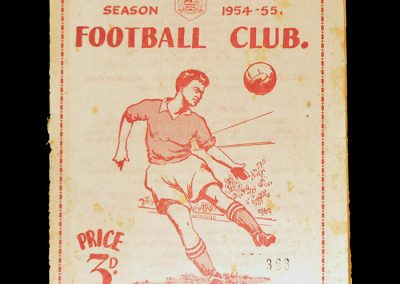
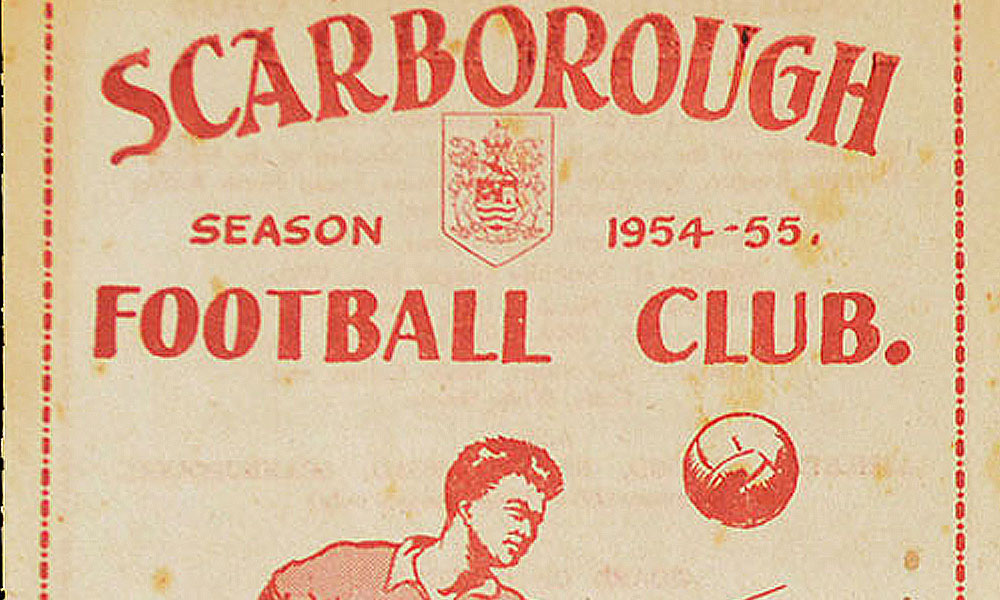
Scarbourough v Farsley Celtic 02.04.1955
-
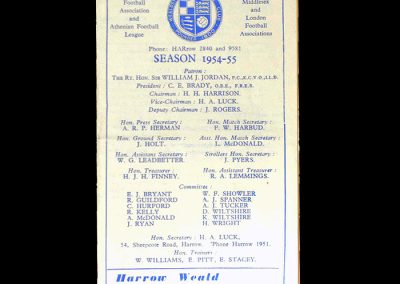
Wealdstone v Enfield 02.04.1955 (Middlesex Snr Cup Semi Final)
-
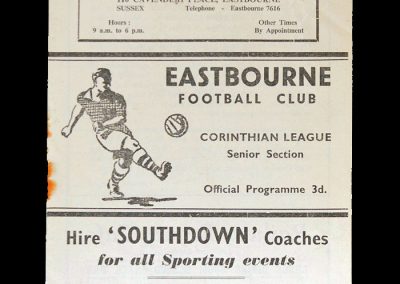
Eastbourne v Slough Town 02.04.1955
-

Salisbury v Chippenham 02.04.1955
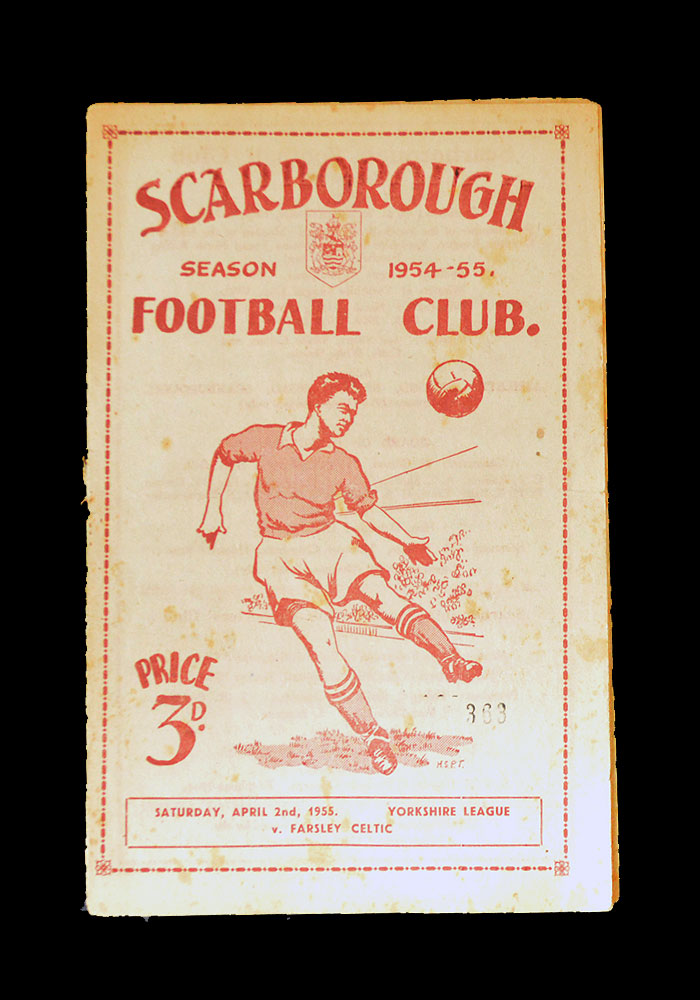
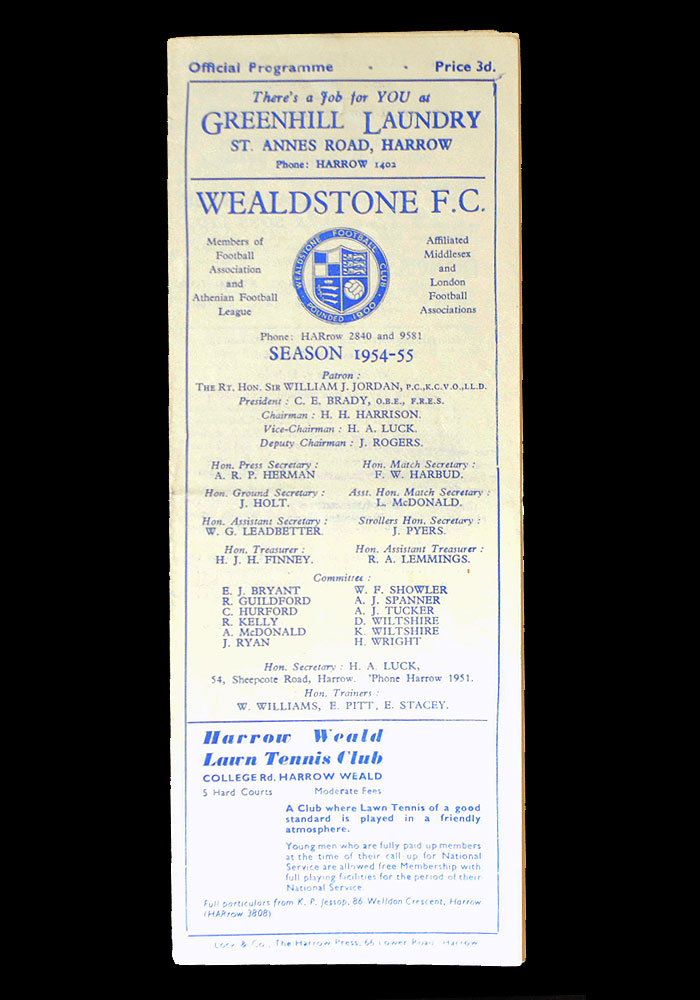
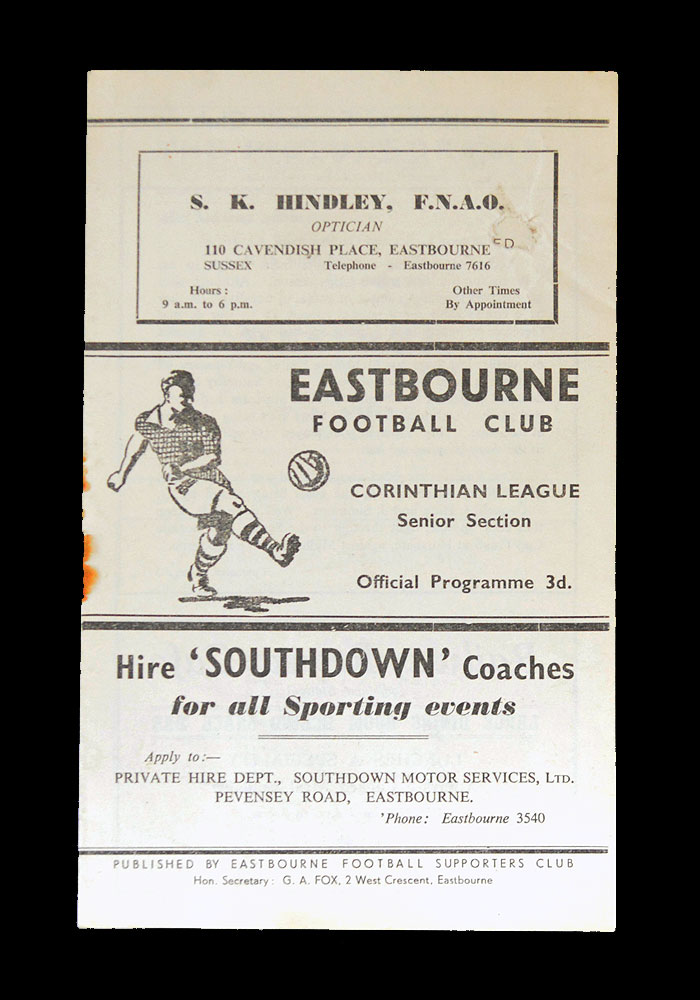

Quirky grounds live on through programmes
Another reason to value lower-league and non-league programmes is that they preserve grounds and settings that modern coverage often forgets. The top end of the game has become increasingly standardised in look and presentation. Lower down, grounds have always been more individual. Terraces tucked behind rows of houses, odd sloping pitches, covered ends with a distinct local nickname, social clubs attached to one side of the ground, floodlights that look almost improvised by modern standards — all of this belongs to the visual and emotional landscape of football below the elite.
The programme becomes part of that setting. Sometimes it reflects the ground through artwork or photography; sometimes it does so more indirectly through tone, language and local reference points. Either way, it helps preserve the feel of a place. That matters because many of those grounds have changed radically or disappeared altogether. Once a stand is demolished or a club relocates, the programme becomes one of the few ordinary objects still carrying the atmosphere of the old home.
Community stories appear more clearly in smaller issues
Big clubs have history, of course, but smaller clubs often reveal community life more openly in their programmes. A lower-league issue might include notes on a volunteer fundraiser, a social evening, a youth-team success, a committee member’s long service or an appeal to help repair part of the ground. These things may look minor compared with first-team headlines, yet they are often the very details that explain what a club meant to its town.
That is why lower-level programmes deserve more respect in collecting circles. They are not only football documents; they are local history documents. The adverts can tell you which shops were trading, which pubs backed the club, which firms served as sponsors and what sort of economy supported the local game. Programmes from any level can do this, but those from smaller clubs often do it with less filtering and less polish, which makes them feel more intimate and revealing.
Scarcity is not only about age
Collectors often think of rarity in terms of great age, but non-league and lower-division programmes can be scarce for a different reason: fewer were printed, fewer survived and fewer were treated as collectibles at the time. A programme from a modest club in an ordinary league season may not have been saved in large numbers, especially if the club itself later declined, merged or disappeared.
That gives many such issues a quiet rarity. They may not command the publicity of a famous final, but they can be genuinely difficult to find in strong condition. For collectors of rare football programmes, that is part of the appeal. You are often chasing items with a smaller footprint and a more fragile survival story.
And when a small club later produces a famous upset or a notable cup run, earlier routine issues can become more interesting in hindsight. A programme from before the national spotlight arrived can feel like a glimpse of the club in its more natural state, before history suddenly paid attention.
They balance a collection beautifully
A collection built entirely around major events can become impressive but slightly predictable. Adding lower-league and non-league material changes the shape of it. It introduces surprise, character and variety. A famous final programme may tell you how football crowned itself. A lower-division issue may tell you how football actually lived.
That contrast is one of the joys of collecting. A shelf containing a European final, an FA Cup final and then a thin, locally printed programme from a Northern Premier League ground in winter feels like a truer map of the sport. It reminds us that football has always operated on many levels at once. The grand stage matters, but so do the draughty terraces, committee rooms and local derbies that sustained the game week after week.
Television never showed the whole pyramid
Modern football memory is heavily shaped by television, but television has always been selective. It shows what is easiest to package, what sells nationally and what fits the wider narrative of success. Lower-league and non-league football has often sat outside that frame unless a cup upset briefly drags it into view.
Programmes help correct that imbalance. They record the game where cameras seldom lingered. They preserve the clubs, grounds and voices that shaped football culture away from the top division. That is why they matter so much. They widen the story.
10 Footballs describes programmes as evidence of “players and pitches, of towns and terraces, of the wider world shaping the sport”. That idea is perhaps nowhere more convincing than in lower-league collecting. The smaller the stage, the more clearly you can often see the town and the terrace together.
A richer way to collect football’s past
Non-league and lower-division programmes deserve a place in any serious collection because they preserve the game at its most rooted. They hold local rivalry, oddity, hardship, humour and pride. They capture football before it was smoothed into a single broadcast product. They show the sport not only as spectacle, but as habit, community and place.
For anyone truly interested in football history, that makes them far more than supporting material. They are some of the most revealing pieces you can own. And for collectors of rare football programmes, they offer the added pleasure of discovery — the sense that some of the finest treasures are still waiting in the quieter corners of the game.